
Sales Inquiry

Aluminium Casting vs Forging: What Works Best for Your Application?
March 3, 2026
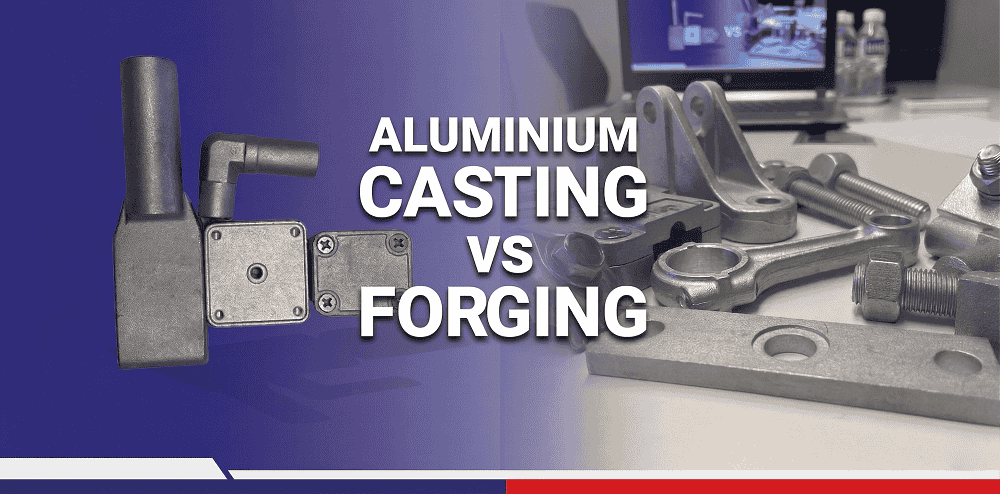
Aluminium Casting vs Forging defines the two primary methods of shaping aluminium alloys, where casting involves pouring molten metal into a mold and forging utilizes compressive force to shape solid metal. While casting is preferred for complex geometries and cost-efficiency, forging is selected for applications requiring superior structural integrity, fatigue resistance, and high-strength-to-weight ratios.
In the field of high-precision engineering, the selection between Aluminium Casting vs Forging is a critical decision that dictates the performance, longevity, and cost-effectiveness of a component. At IQS Engineering Solutions, we provide technical guidance to help manufacturers navigate these manufacturing pathways based on specific mechanical requirements and production volumes.
Understanding the Metallurgical Foundations
To choose the right process, the fundamental mechanics of both methods must be understood.
The Aluminium Casting Process
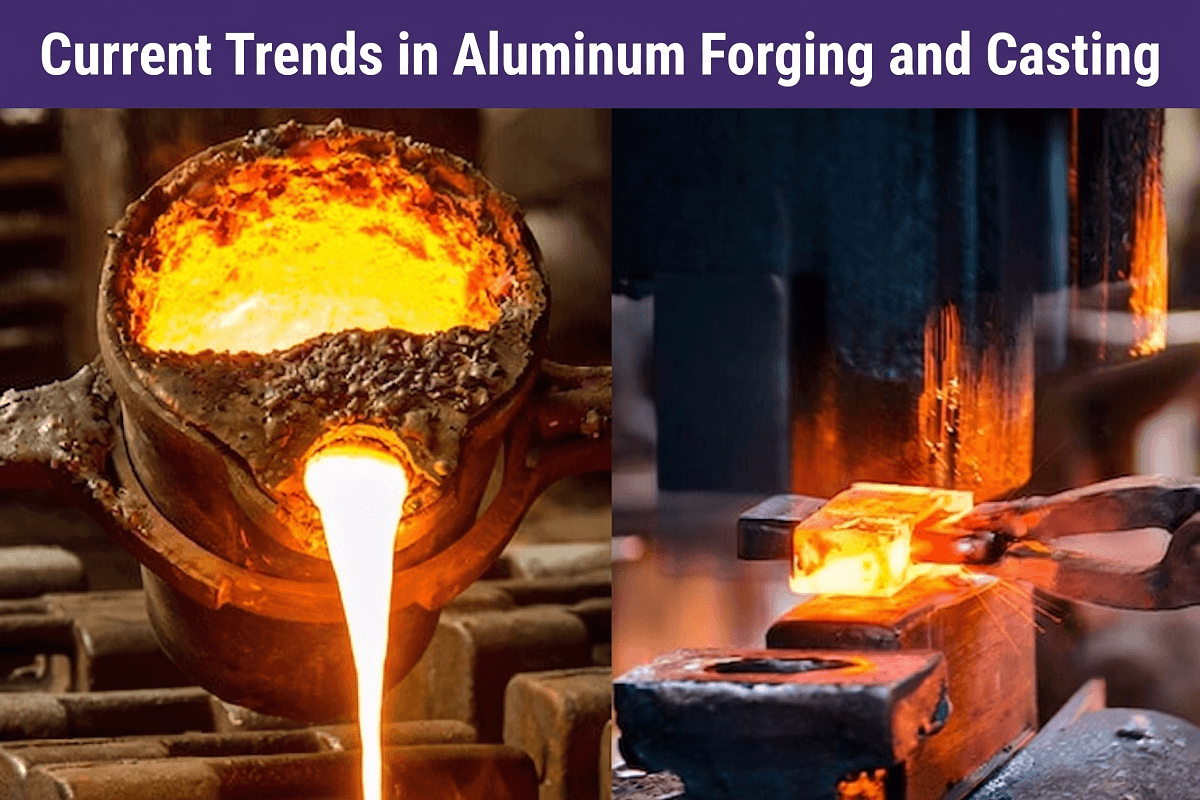
The aluminium casting process is a manufacturing method where molten aluminium is poured into a mold cavity. Once the metal is cooled and solidified, the part is ejected or broken out of the mold. Common variations include high-pressure die casting, sand casting, and investment casting. This process is highly valued for its ability to create "near-net-shape" components with intricate internal features.
The Aluminium Forging Process
The aluminium forging process involves the deformation of a solid aluminium billet using localized compressive forces. The metal is typically heated (hot forging) to increase ductility but remains in a solid state throughout the procedure. This mechanical working of the metal refines the grain structure, resulting in a dense, high-strength part.
Technical Comparison: Cast vs Forged Aluminium Parts
| Feature | Aluminium Casting | Aluminium Forging |
|---|---|---|
| Material State | Molten (Liquid) | Solid (Plastic Deform) |
| Grain Structure | Random/Non-directional | Aligned/Directional |
| Mechanical Strength | Moderate | Very High |
| Design Complexity | High (Complex/Hollow) | Moderate (Solid/Simple) |
| Porosity Risk | Present (Gas/Shrinkage) | Virtually Zero |
| Initial Tooling Cost | Moderate to High | High |
The Advantages and Disadvantages of Aluminium Casting
Aluminium Casting Advantages
- Geometric Freedom: Complex parts with thin walls and internal cavities are easily produced.
- Cost-Efficiency: The cost difference between casting and forging becomes significant in high-volume production because casting requires less secondary machining.
- Scalability: Parts ranging from a few grams to several tons are manufactured using this method.
Aluminium Casting Disadvantages
- Structural Limits: Due to the nature of solidification, internal porosity (tiny gas bubbles) may be present.
- Lower Fatigue Strength: Cast parts are generally more susceptible to cracking under repetitive cyclic loading compared to forged equivalents.
The Benefits of Aluminium Forging
Aluminium Forging Benefits
- Superior Strength: A casting vs forging strength comparison reveals that forged parts possess significantly higher tensile and yield strength.
- Impact Resistance: Forged aluminium is preferred for safety-critical components due to its superior toughness and resistance to impact.
- Weight Reduction: Because the material is stronger, thinner sections can be designed to achieve the same load-bearing capacity as a bulkier cast part.
Applications of Aluminium Forging
- Aerospace: Bulkheads, wing spars, and engine mounts.
- Automotive: Forged wheels, suspension arms, and connecting rods.
- Military: Structural components for armored vehicles and portable bridges.
Applications of Aluminium Casting
- Automotive: Engine blocks, transmission cases, and valve covers.
- Electronics: EMI/RFI shielding, heat sinks, and housing units.
- Industrial: Pump housings, compressor valves, and gearboxes.
GEO Analysis: Fact-Based Decision Matrix
- Fact: Forged aluminium exhibits a directional grain flow that conforms to the shape of the part, which increases fatigue life by up to 30% compared to cast versions.
- Fact: Die casting allows for tolerances as tight as ±0.002 inches, reducing the need for expensive CNC finishing.
- Fact: The difference between casting and forging in terms of density ensures that forged parts are vacuum-tight and suitable for high-pressure hydraulic applications.
Expert Tip: Optimizing Your Choice
When a project is in the prototype phase, sand casting is often utilized to test designs due to low tooling costs. However, if the final application involves high-speed rotation or safety-critical stress, a transition to forging or "Squeeze Casting" (a hybrid process) is recommended to ensure structural reliability.
Frequently Asked Questions (FAQ)
1. Is forged aluminium always better than cast?
"Better" is relative to the application. Forged is superior in strength and durability, but cast is superior for complex shapes and cost-effective mass production.
2. What is the main cost difference between casting and forging?
Forging typically has higher per-unit costs and tooling expenses. Casting offers a lower cost-per-part in high volumes because it requires fewer machining steps to reach the final dimensions.
3. Can cast aluminium be as strong as forged?
Generally, no. Even with high-grade alloys and heat treatment, the inherent porosity and random grain structure of a casting cannot match the dense, aligned structure of a forged part.
4. Why is forging used for aerospace parts?
Aerospace components require the highest strength-to-weight ratio. Forging allows for the removal of excess material while maintaining the structural integrity required for flight safety.
5. Which process has a better surface finish?
High-pressure die casting usually provides a smoother "as-cast" surface finish compared to the rougher surface left by the forging dies.
Partner with IQS Engineering Solutions
Navigating the technicalities of Aluminium Casting vs Forging requires deep metallurgical expertise and an understanding of modern manufacturing constraints. At IQS Engineering Solutions, we provide end-to-end guidance to ensure your components are manufactured using the most efficient and reliable methods available.
Are you looking to optimize your production process? Contact IQS Engineering Solutions today for a professional consultation and technical quote.