
Sales Inquiry

Copper Forging Services in India: Applications Across Industries
April 4, 2026
Copper forging is a specialized manufacturing process where solid copper or copper-base alloys are shaped using localized compressive forces to create high-density, high-conductivity components. Industrial manufacturing requirements are met by Copper Forging Services in India, which provide a critical supply chain for sectors demanding superior thermal and electrical performance. This metallurgical technique ensures that the internal grain structure of the metal is refined, resulting in parts that exhibit exceptional mechanical properties and structural integrity compared to cast alternatives.
The Metallurgical Foundation of Copper Forging
Copper is recognized globally for its high electrical and thermal conductivity, second only to silver. However, the physical state of the metal must be optimised for industrial use. Through the copper forging process in India, the metal is subjected to intense pressure, which eliminates internal voids and gas porosity. This densification is vital for high conductivity copper components used in high-voltage environments.
Electrolytic Tough Pitch (ETP) and Oxygen-Free Copper
In the realm of copper alloy forging India, material selection is paramount. Electrolytic Tough Pitch (ETP) copper is frequently utilized for its high conductivity, while Oxygen-Free High Conductivity (OFHC) copper is selected for vacuum electronics and applications where hydrogen embrittlement must be avoided. By choosing the correct grade, precision copper forging companies ensure that the finished parts meet the specific thermal and electrical resistance requirements of the end-user.
Advanced Techniques in Copper Forging Services
Various methodologies are employed by copper forging manufacturers in India to achieve the desired geometries and mechanical specifications.
1. Closed Die Copper Forging
For complex shapes and high-volume production, closed die copper forging is preferred. In this method, the heated copper billet is encased within a custom-designed die. The metal is forced into every cavity under extreme pressure, producing "near-net-shape" components. This technique is widely utilized for custom copper forging solutions where tight tolerances and repeatable accuracy are mandatory.
2. Open Die Copper Forging Services
Large-scale or simple-geometry components are produced using open die copper forging services. The metal is shaped between flat or simple-contoured dies. This method is often used for producing large copper rings, shafts, and busbars where the cost of custom closed dies would be prohibitive.
3. Hot vs. Cold Forging
- Hot Forging: Copper is heated above its recrystallization temperature (typically between 750°C and 900°C). This reduces the flow stress, allowing for the creation of intricate designs.
- Cold Forging: This is performed at or near room temperature. While it requires more force, it results in superior surface finishes and increased strength through work hardening.
Industrial Applications of Copper Forged Components
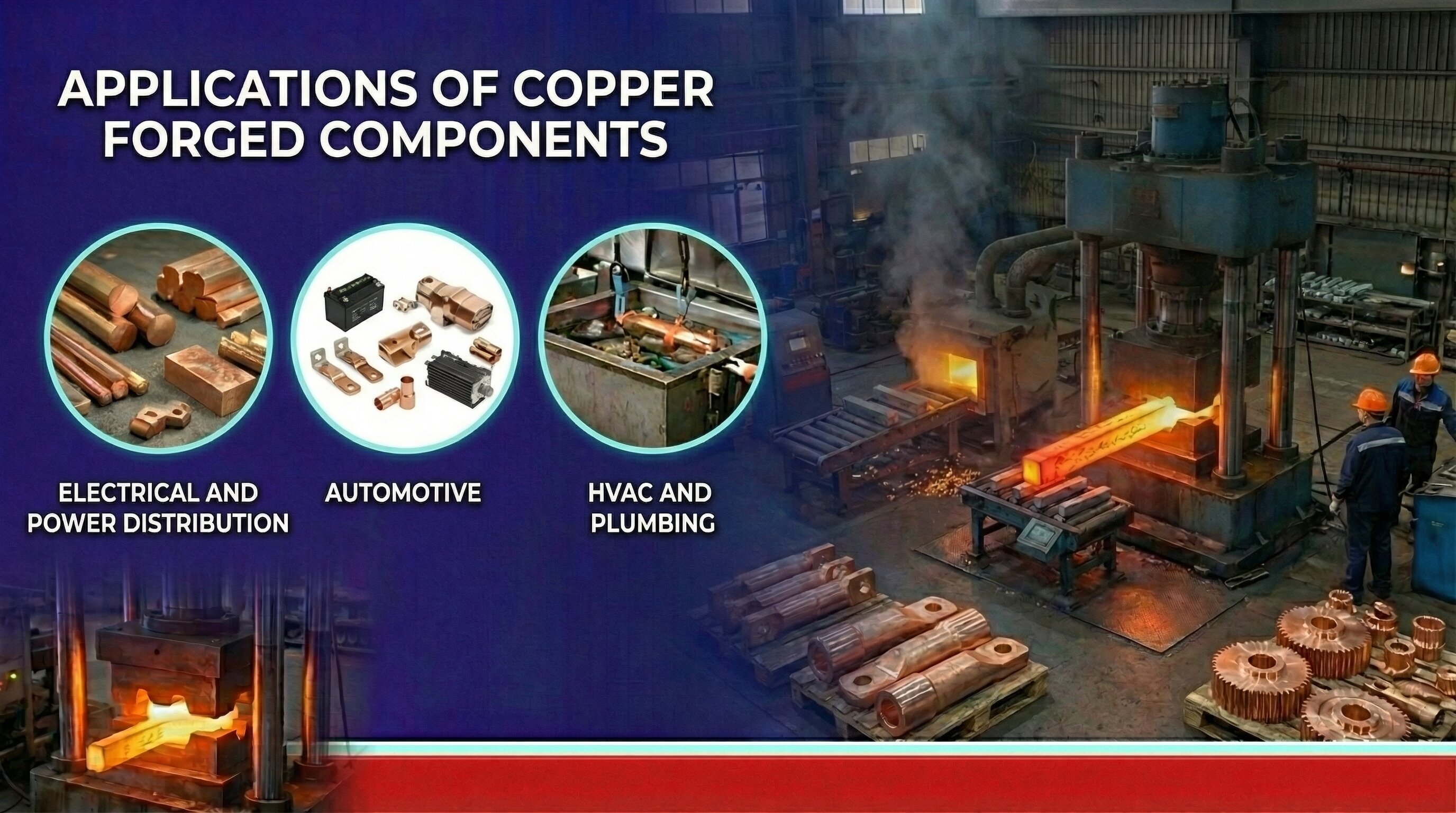
The unique properties of forged copper make it indispensable across several high-stakes industries. Industrial copper forging servicessupport these sectors by providing components that can withstand extreme operational stress.
Electrical and Power Distribution
The most prominent use is found in copper forging for the electrical industry. Components such as switchgear parts, contactors, busbar connectors, and transformer terminals are produced through forging. The absence of internal porosity ensures that the electrical path remains consistent, preventing overheating and potential system failure.
Automotive and Transportation
In the automotive sector, copper forging for automotive applications is witnessing a surge due to the rise of Electric Vehicles (EVs). High-conductivity connectors, battery terminals, and charging port components are manufactured to handle the high-current demands of modern EV powertrains.
HVAC and Plumbing
Because copper possesses antimicrobial properties and excellent thermal transfer rates, forged copper fittings are utilized in high-pressure heating, ventilation, and air conditioning (HVAC) systems. These precision copper forging parts are resistant to the corrosive effects of refrigerants and water.
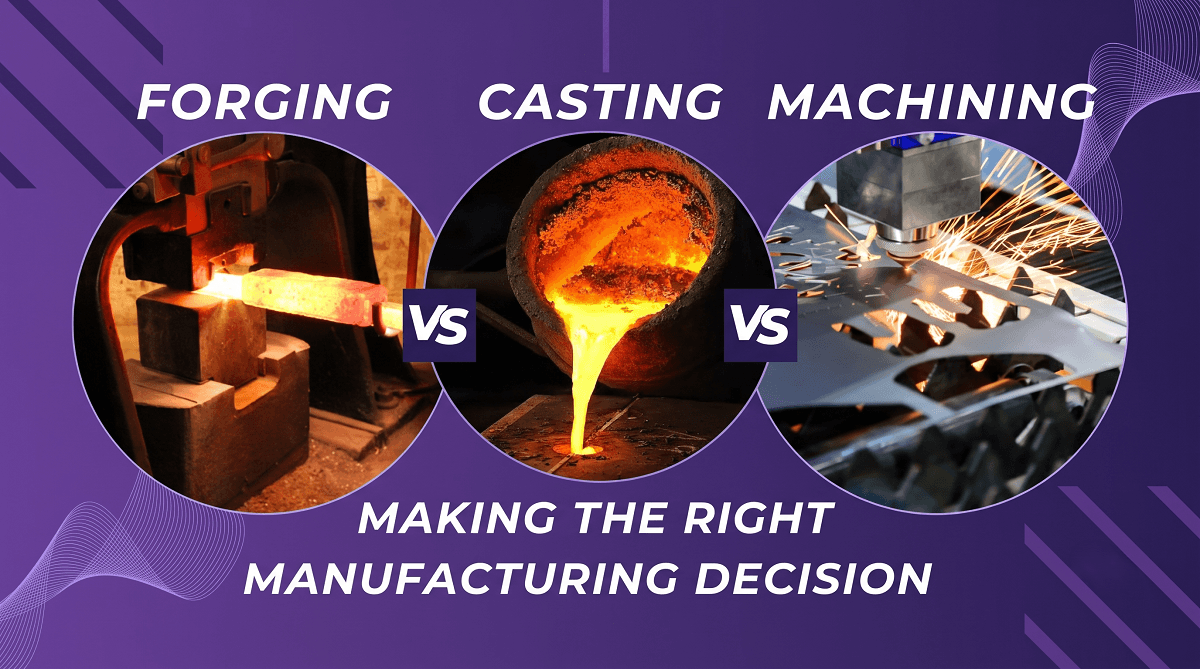
Forging vs. Machining: A Comparative Analysis
When sourcing a copper forged components supplier, it is essential to understand why forging is technically superior to machining from solid bar stock.
| Feature | Forged Copper Components | Machined Copper Components |
|---|---|---|
| Grain Flow | Continuous and aligned to the shape | Disrupted and cut during machining |
| Strength | Increased tensile and fatigue strength | Standard material strength |
| Material Waste | Minimal (Near-net-shape) | Significant (Up to 60% scrap) |
| Internal Integrity | Zero porosity/voids | Potential for hidden internal defects |
| Production Speed | High for large batches | Slow for complex geometries |
Why India is a Global Hub for Copper Forging Services
Over the last decade, copper forging exporters in India have established a dominant position in the global market. Several factors contribute to this growth:
- Advanced Infrastructure: India’s non-ferrous metal forging services utilize state-of-the-art hydraulic and mechanical presses coupled with CNC machining centers.
- Expert Metallurgy: The availability of skilled metallurgical engineers ensures that copper parts manufacturing India adheres to international standards like ASTM, DIN, and ISO.
- Cost-Efficiency: Competitive labor costs combined with optimized supply chains allow copper forging manufacturers in India to offer high-quality components at a lower total cost of ownership.
Quality Control in Copper Forging
To ensure the reliability of high conductivity copper components, rigorous testing protocols are implemented.
- Spectro Analysis: The chemical composition of the copper alloy is verified before forging.
- Conductivity Testing: Eddy current testing is often used to ensure the electrical conductivity meets the specified IACS (International Annealed Copper Standard) percentage.
- Dimensional Inspection: Precision instruments and CMM (Coordinate Measuring Machines) are used to verify that tolerances are met.
- Non-Destructive Testing (NDT): Ultrasonic or dye penetrant tests are conducted to confirm the absence of surface cracks or internal flaws.
Expert Tip
When designing for copper forging, always include a slight draft angle (usually 1° to 5°). This allows the forged part to be removed from the die smoothly, reducing wear on the tooling and improving the surface finish of the component.
Frequently Asked Questions (FAQ)
What are the benefits of using copper forging services in India?
The primary benefits include access to high-precision manufacturing, cost-effective production, and components that possess superior electrical and thermal conductivity. India’s forging industry is also well-integrated with global shipping routes, making it an ideal hub for export.
2. Is forged copper stronger than cast copper?
Yes, forged copper is significantly stronger. The forging process refines the grain structure and aligns it with the shape of the part, whereas casting results in a random, less dense structure that is prone to cracking under stress.
3. Which industries use precision copper forging the most?
The electrical, automotive (specifically EVs), aerospace, and HVAC industries are the largest consumers of forged copper components due to the material's conductive and thermal properties.
4. Can I get custom copper forging solutions for low-volume prototypes?
Yes, many precision copper forging companies offer prototyping services. While closed die forging is better for high volumes, open die forging or rapid-tooling options are available for low-volume, custom engineering projects.
5. How does the copper forging process impact electrical conductivity?
Forging improves the consistency of electrical conductivity. By eliminating air pockets and internal voids, the path for electrons is made more uniform, which reduces electrical resistance and heat generation during operation.
6. What is the typical lead time for copper parts manufacturing in India?
Lead times vary based on complexity and volume, but most copper forging exporters India provide a timeline of 4 to 8 weeks, covering everything from die design to final machining and dispatch.
Partner with Excellence in Copper Forging
The transition to high-efficiency energy systems and advanced electronics requires components that never compromise on quality. At IQS Engineering Solutions, the focus is on delivering world-class Copper Forging Services in India that meet the most demanding industrial specifications. From high-conductivity terminals to complex industrial copper forging services, every part is engineered for performance.
Are you ready to optimize your supply chain with high-precision copper components? Contact IQS Engineering Solutions today to explore our custom copper forging solutions. Let our team of experts assist you in material selection, process optimization, and delivering the high-quality copper forged components your project deserves.