
Sales Inquiry
— OVERVIEW
Built for
Built for
industries that
demand precision.
Built for industries that demand precision.
Non-ferrous Casting and Forging products produced by us are used in a wide variety of industries including Automotive Industry, Agriculture Equipment Industry, Pipelines & Valve Systems, Fire & Safety Systems, Heating & Air-Conditioning Industry, Electronics & Consumer Goods, Electrical & Earthing fittings, Marine Hardware and Builder Hardware Industries.
When your order is placed with IQS Engineering Solutions, our goal is to deliver it on time in a shape, condition and quality that minimizes machining time, lowers cost and reduces material waste. IQS Engineering Solutions, as an ISO certified forging manufacturer, has the necessary expertise and infrastructure to ensure this.
PROCESS / 01
⚡
FORM FROM FLOW
Casting
PROCESS / 01
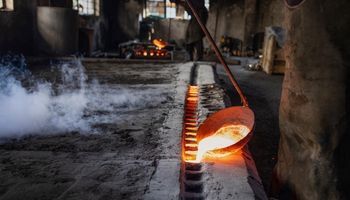
Casting is a process where metal is melted and poured into a hollow mold made in the shape of the desired object. Our casting processes harness gravity flow into sand, ceramic or metal molds — enabling complex geometries impossible with any other method.
BENEFITS
- Any complex shape — internal or external
- Compatible with virtually any metal
- Handles materials with metallurgical constraints
- Scales from grams to 200-tonne pieces
PROCESS / 02
🛠️
SHAPED BY FORCE
Forging
PROCESS / 02
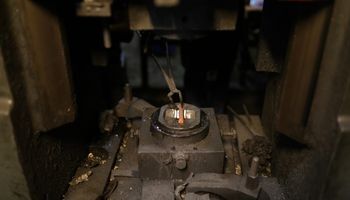
Forging is a manufacturing process where material is shaped in solid form using compressive forces such as hammering or pressing. This method enhances the internal structure of the material, resulting in superior strength and durability.
BENEFITS
- Stronger and more reliable components
- Excellent response to heat treatment
- Improved and consistent metallurgical properties
- Wide size range of products
- Enhanced design flexibility
PROCESS / 03
⚙️
PRECISION ENGINEERING
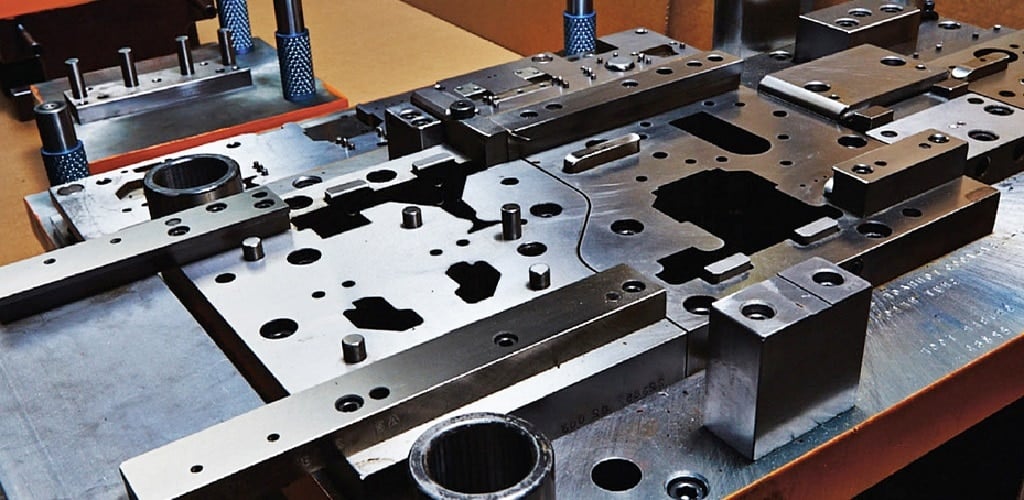
Tooling & Die Making
PROCESS / 03
Our manufacturing process begins with close collaboration between your team and our engineering experts. We leverage advanced infrastructure and data-driven methodologies to ensure precision, quality, and efficiency at every stage.
PROCESS STEPS
- Component Modelling
- Tooling Modelling
- Simulation & Optimization
- Tool Manufacturing
- Sample Production
- Testing & Approval
- Production Handover
01
Component & Tooling Modelling
CAD/CAM engineering capabilities allow us to design detailed products and complex geometries.
Our manufacturing experts and quality engineers work together to reverse engineer parts and refine
their design, tooling, and fabrication processes.
02
Simulation & Optimization
We leverage advanced infrastructure and data-driven methodologies to simulate product performance
and optimize designs. This ensures precision, efficiency, and quality before actual manufacturing begins.
03
Tool Manufacturing
CNC Vertical Machining Centers (VMC) are used for precision metal cutting including steel, aluminum,
and other hard materials. These machines perform drilling, carving, engraving, and chamfering with high accuracy.
Spark Erosion Machines (EDM) utilize electrical discharges to machine complex shapes, sharp corners,
and blind cavities where conventional machining is not possible.
04
Sample Production & Testing
Components undergo precision finishing using grinding and machining processes to achieve superior surface
quality and dimensional accuracy. Samples are tested and validated to meet required standards before approval.
05
Production Handover
Finalized designs and optimized tool paths from CAD/CAM systems are transferred into production.
This ensures a seamless transition from development to mass manufacturing with consistent quality and efficiency.
Casting
Casting is a process where metal is melted and poured into a hollow mold made in the shape of the desired object. The casting process is among many that have been used for manufacturing shaped metal components. Casting processes involves the process of flow under gravity in moulds made of sand, ceramic or metal.
Benefits of Casting:
- Any complex shape can be made, whether external or internal
- Any material can be used in the process of casting
- Many materials having metallurgical considerations can only be processed through casting processes
- Casting can be done of any size, even up to 200 tons
Forging
Where deformation of materials happens to a solid form, often by hammering or pressing the material, this creates the desired shape.
Benefits of Forging:
- Components manufactured by forging process are stronger
- Forging offers a high-grade response to heat treatment
- Forging process results in more consistent and better metallurgical properties
- Forging offers a broad size spectrum of products
- Designing flexibility is increased with the forging process
Tooling & Die Making
Our manufacturing process begins by partnering your team with our design and engineering experts.We have state-of-the-art infrastructure to achieve this. We take sufficient time to understand your requirements of design and quality. We use 100+ data points to capture these requirements and map them to the manufacturing process. The steps followed are –
- Component Modelling
- Tooling Modelling
- Simulation for optimization
- Tool Manufacturing
- Sample Production
- Sample testing and approval
- Production Handover
- Latest CAD/CAM software - CAD/CAM engineering capabilities allow us to design detailed products and product geometry. Our manufacturing experts and quality engineers work synchronically to reverse engineer parts and refine their design, tooling, and fabrication.
- CNC Vertical machining Center with Auto Tool Changer (VMC) - VMCs are utilized mainly as metal cutting machines that remove steel, aluminum, or other hard materials, shaping a raw block of element into a precisioned, or “machined” surface. VMCs are used not only cutting, but also drilling, carving, engraving, chamfering and several other purposes. These machines are very popular all across the world because of their versatility and relatively low cost.
- Spark Erosion Machine – Spark erosion is directed through metal disintegration machines (EDM). EDMs utilize electrodes to send low voltage/ high current electrical charges that melt the selected piece of metal while cold water thermal shocks the molten steel and pulverizes it into micro-size parts, and flushes it away. Spark erosion machines are also used to create blind cavities. These are also utilized where conventional milling machines cannot be used, such as for machining sharp corners or materials.
- Surface Grinding Machine - Surface grinding machines are used to provide the components a more sophisticated glance and produce a good surface finish on them. In these machines, a grinding wheel is used as a cutting tool to remove the component from the surface of the workpiece.
- 3-D CNC Engraving Machine - We use the most advanced 3D CNC engraving machines to cut out the metals and carve a design out of them. Our Modern CAD/CAM software makes it relatively simple to draw an idea, work out the tool paths, and turn it into a finished object.