
Sales Inquiry

Screw Press vs Hammer Forging for Aluminium: Which Process Suits Your Part?

August 26, 2026
Choosing between screw press and hammer forging changes how your aluminium part performs in the field, not just how it looks on paper. Screw press forging applies slow, controlled pressure that suits close-tolerance, high-strength components, while hammer forging relies on rapid strikes that work well for simpler, high-volume shapes. This blog breaks down how each aluminium forging process affects grain flow, dimensional accuracy, and mechanical properties, so design engineers and procurement teams can pick the right route for their component instead of guessing. We also look at how alloy grade, part geometry, and production volume influence that decision.
What Is Aluminium Forging and Why the Process Choice Matters
Aluminium forging is a metal shaping method where a solid billet is heated and deformed under mechanical force until it fills a die cavity, producing a part with a continuous, unbroken grain structure. Unlike casting, where molten metal is poured into a mould, forging works the metal in its solid state. This is what gives forged aluminium parts their fatigue resistance, higher strength-to-weight ratio, and better response to stress compared to cast alternatives.
The equipment used to apply that force, whether a screw press or a hammer, decides how the grain flows, how tight the final dimensions come out, and how much machining is needed afterward. For industries like automotive, aerospace, and heavy trucking, this equipment choice can directly affect part life and cost per piece.
Screw Press Forging for Aluminium Components
A screw press forges metal using a rotating screw mechanism that converts rotational energy into a single, controlled downward stroke. The force builds gradually and holds the workpiece under pressure for a longer duration compared to a hammer blow.
Key advantages of screw press forging for aluminium parts:
- Consistent, repeatable strokes that reduce part-to-part variation
- Better control over strain rate, useful for alloys sensitive to deformation speed
- Closer tolerances with less draft, which lowers machining stock
- Suitable for medium to complex geometries, including parts with thinner webs
- Good fit for aluminium alloys such as 7075, 6061, 6082, and 2014 where strength and surface finish both matter
Because the stroke is slower and the load is applied more evenly, screw press forging tends to produce components with fewer surface defects and a cleaner die fill. This makes it a preferred choice for structural automotive parts, pneumatic fittings, and forged components destined for aerospace and heavy-duty truck applications.
Hammer Forging for Aluminium Components
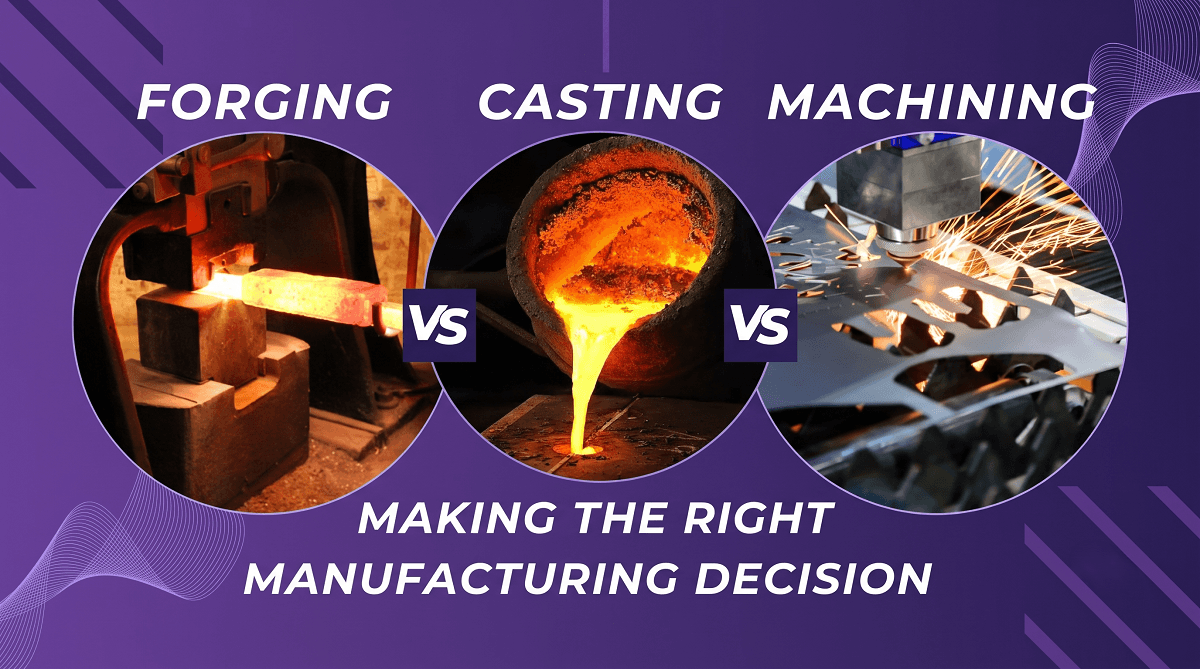
Hammer forging, sometimes called drop forging, shapes the workpiece using repeated, high-impact blows delivered in quick succession. Each blow deforms the metal a little further until it fills the die.
Key characteristics of hammer forging for aluminium parts:
- Fast cycle times, which can suit simpler part geometries at scale
- Lower upfront tooling investment in some setups
- Effective grain refinement through repeated impact
- Better suited to parts where extremely tight dimensional control is not the primary requirement
- Higher operator skill dependency, since blow count and force are adjusted manually or semi-automatically
Hammer forging can introduce more variation between parts if strike consistency is not tightly monitored, and it often needs more finishing machining than press-forged aluminium components with similar geometry.
Screw Press vs Hammer Forging: Key Differences
- Force application: screw press delivers gradual, sustained pressure; hammer forging delivers rapid, repeated impact
- Dimensional accuracy: screw press generally holds tighter tolerances with less draft allowance
- Grain flow control: both methods produce good grain flow, but screw press offers more predictable results across a production run
- Surface finish: screw press forged aluminium parts typically need less secondary machining
- Production speed: hammer forging can be faster for basic shapes in high multiples
- Part complexity: screw press handles moderately complex geometries with thinner sections more reliably
Which Process Suits Your Part?
The right choice depends on three factors: part geometry, alloy grade, and end-use load conditions.
If your component has close tolerances, thin webs, or will carry structural loads in automotive, aerospace, or fluid control applications, a screw press aluminium forging process is usually the better fit. It reduces machining stock and delivers a more uniform grain structure, which matters when the part sees cyclic stress in service.
If the part is a simpler shape, produced in very high volumes, and tolerance requirements are moderate, hammer forging can still be a workable and economical route.
Alloy selection also plays a role. Grades like 7075 and 2014 are heat-treatable and gain most of their strength through the forging and subsequent heat treatment cycle, so process control during forging directly affects the final mechanical properties. Grades such as 6061 and 6082 offer a balance of strength, corrosion resistance, and machinability, and respond well to screw press forging where consistent grain flow is required.
Specification Considerations for Aluminium Forged Parts
When evaluating a forging partner for aluminium components, ask about:
- Alloy options available (7075, 6061, 6082, 2014, and equivalents)
- Whether parts are produced on screw presses, hammer equipment, or both
- In-house machining and heat treatment capability
- Surface finish and fatigue testing data
- Typical lead time for prototype and production batches
- Applications the supplier already serves, such as automotive pneumatics, medical supplies, or heavy trucks
A supplier with both forging and machining under one roof can usually shorten lead times and reduce handling variation between process steps.
How IQS Engineering Approaches Aluminium Forging
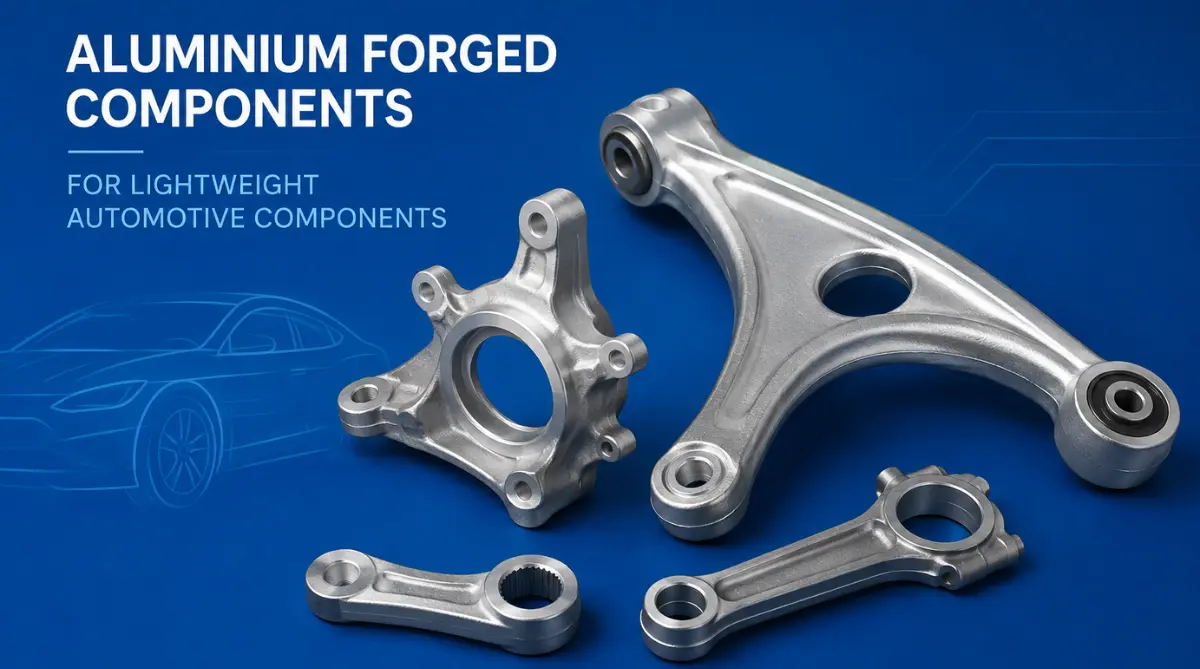
IQS Engineering Solutions manufactures aluminium forged components using screw presses and electric heating ovens, working in alloys including 7075, 6061, 6082, and 2014 for customers across automotive, aerospace, medical, and heavy truck segments. The setup combines forging, casting, and machining capability at one facility, which supports design flexibility, competitive lead times, and consistent surface finish across production runs. Being ISO 9001:2015 and IATF certified, IQS serves customers across India and exports to the US, UK, Canada, and other regions, applying documented process control at each forging stage.
Frequently Asked Questions
1. What is the main difference between screw press forging and hammer forging?
Screw press forging applies a slower, sustained force in a single controlled stroke, while hammer forging shapes the metal through multiple rapid impacts. This affects tolerance control, grain flow consistency, and the amount of finishing machining required.
2. Which aluminium forging process gives better dimensional accuracy?
Screw press forging generally produces closer tolerances and less draft, reducing the machining stock needed on the final part compared to hammer forged components.
3. Is hammer forging cheaper than screw press forging for aluminium parts?
It can be, particularly for simple shapes at high volumes, but screw press forging often reduces downstream machining costs, which can offset the difference over a full production run.
4. Which aluminium alloys are commonly used in forging?
Common grades include 7075, 6061, 6082, and 2014, each chosen based on required strength, corrosion resistance, and how the part will be heat treated after forging.
5. What industries use forged aluminium components?
Forged aluminium parts are widely used in automotive pneumatics, aerospace components, heavy trucks, medical supplies, and general industrial applications where strength-to-weight ratio and fatigue resistance are priorities.