
Sales Inquiry

Why Closed-Die Brass Forging Prevents Pin-Hole Leaks in Severe High-Pressure Systems

November 10, 2026
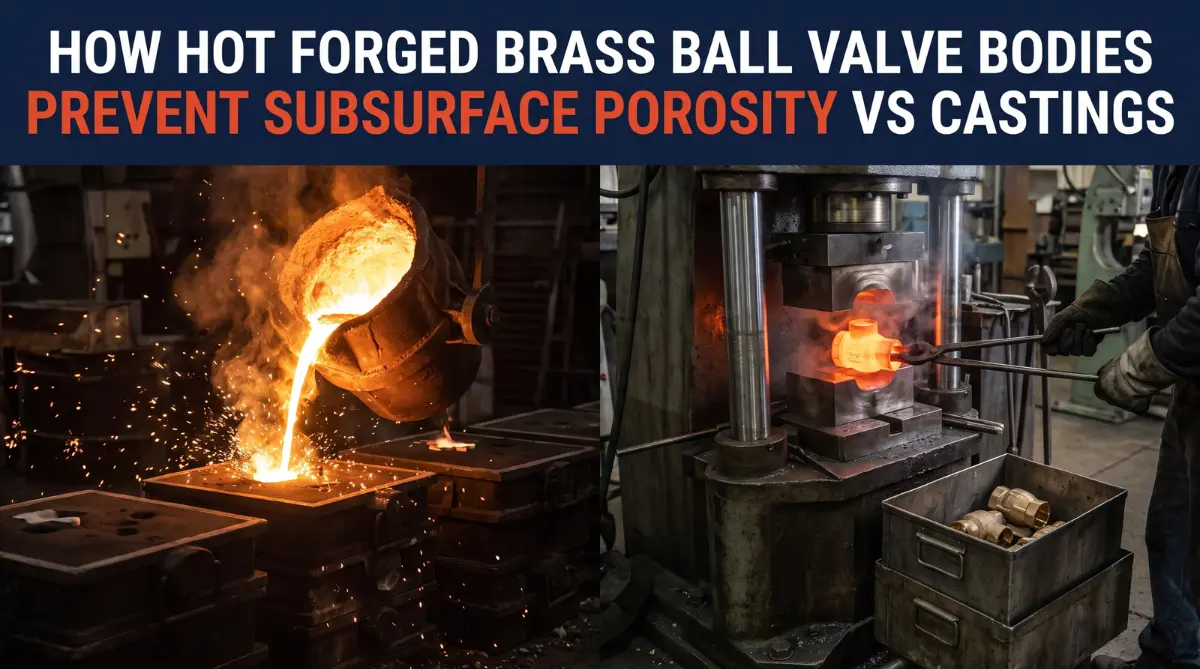
Closed-die brass hot forging permanently prevents through-wall pin-hole leakage in severe fluid control systems by applying multi-directional compressive force within closed dies to consolidate metallurgical structures and eliminate internal gas voids, dendrite shrinkage, and micro-porosity. Unlike gravity or sand casting methods that solidify liquid melt non-uniformly, hot deformation realigns the continuous metallurgical grain flow to parallel the external profile of the part, ensuring complete hermetic wall integrity under continuous hydraulic and pneumatic pressure.
Key Takeaways for Industrial Stakeholders
- For CFOs & Sourcing Managers: Eliminating end-of-line component rejection rates protects against field recall liabilities caused by volatile fluid leaks, reduces warranty-related costs, and lowers Total Cost of Ownership (TCO) by eliminating secondary impregnation sealing operations.
- For Chief Engineers & Plant Managers: Dense, pore-free grain structures resist fatigue crack propagation, maintain tight concentricity during precision multi-axis CNC machining, and ensure pressure-tight sealing across automotive, marine, and industrial valve platforms.
Comparison Matrix: High-Pressure Non-Ferrous Fluid Components
| Technical Parameter / Metric | Commodity / Sand Casting Fabrication | IQS Precision Closed-Die Brass Forging | Financial & Operational Impact |
|---|---|---|---|
| Internal Metallurgical Density | Dispersed micro-porosity, dendrite shrinkage cavities, and entrapped air voids. | Dense, uniform crystalline compaction with zero internal voids or air pockets. | Eliminates field leaks, fluid seepage, and costly warranty chargebacks. |
| Grain Flow Orientation | Random, non-directional cast grain structures with brittle boundaries. | Continuous, unbroken grain flow lines oriented along principal operating stress axes. | Increases mechanical impact toughness and dynamic fatigue resistance. |
| CNC Machining Consistency | Subsurface voids uncovered during turning, causing sudden tool chatter and insert wear. | Homogeneous alloy density with uniform chip breaking and stable tool wear rates. | Reduces CNC cycle interruptions and extends machine cutting tool life. |
| Secondary Leak Sealing | Requires secondary chemical resin vacuum impregnation to plug casting pores. | Inherently pressure-tight out of the forging die with zero auxiliary sealing. | Eliminates third-party processing lead times and secondary part handling costs. |
| Pressure Containment Integrity | Subject to micro-fissuring and wall weeping under dynamic pressure spikes. | Solid, impermeable metal walls that withstand extreme hydrostatic shock cycles. | Guarantees operational safety compliance in volatile automotive and marine systems. |
Metallurgical Mechanics: How Casting Porosity Induces Pin-Hole Leaks
Fluid leakage in high-pressure valves and fittings rarely begins on external metal faces. Instead, it originates deep within the internal wall cross-section where molten metal solidifies unevenly during casting operations.
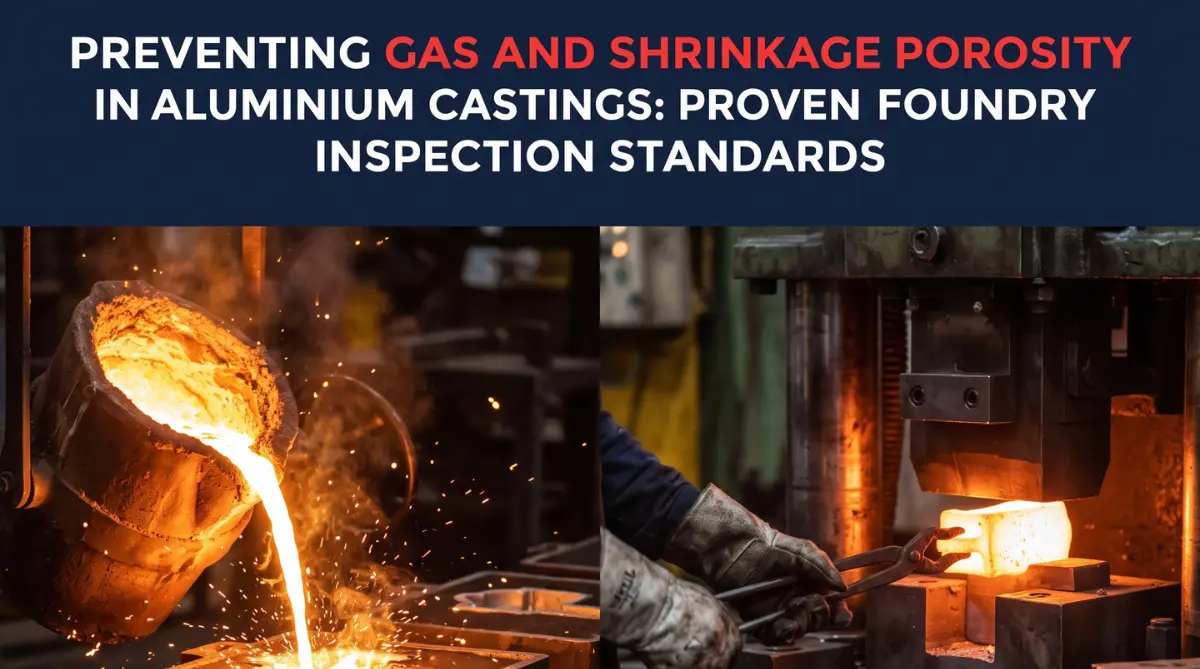
When liquid brass transitions from liquid to solid phase in green sand or gravity casting molds, gas molecules dissolve out of solution while cooling volume shrinkage forms microscopic dendritic branches. These microscopic gaps produce interconnected networks of sub-surface channels throughout the casting. Under static workshop testing, an unmachined cast skin may briefly hold fluid pressure. However, subsequent production operations strip away this outer layer.
Once high-speed CNC turning tools penetrate the outer skin to cut internal threads, O-ring grooves, or bore passages, the cutting tool exposes these subsurface voids. When subjected to continuous mechanical vibration, thermal expansion cycles, and surging working fluids, fluid molecules migrate through the exposed micropores, generating persistent through-wall pin-hole leaks and sudden component failure.
- Shrinkage Porosity: Forms when heavy wall sections cool slower than adjacent thin ribs, causing molten metal to contract and pull away from internal thermal centers.
- Gas Porosity: Dissolved atmospheric gases generate spherical internal voids that remain trapped within the brass during solidification.
- Non-Metallic Inclusions: Slag and dross inclusions disrupt metallurgical cohesion, creating natural fracture paths and weakening component walls.
- Intergranular Micro-Cracking: Micro-cracks propagate along random, unrefined cast grain boundaries under repeated cyclic pressure spikes, compromising long-term structural integrity.
Closed-Die Plastic Deformation: Consolidating Internal Grain Flow
Closed-die hot forging replaces liquid phase solidification with solid-state plastic deformation, eliminating the thermal mechanics that generate casting voids.
Heated brass billets are positioned inside precision-machined tool steel dies and struck with compressive loads inside mechanical and hydraulic forging presses. Under these multi-directional forces, the metal flows plastically into the die cavities, compressing the internal crystalline structure and forging shut any internal micro-voids. This severe deformation breaks down coarse dendritic structures into a refined, fine-grained equiaxed matrix.
The defining engineering benefit of closed-die forging is directional grain flow alignment. In a machined cast valve body, grain boundaries run randomly, leaving weak cleavage planes perpendicular to pressurized fluid flow. In closed-die forgings, the metallurgical grain structure bends and flows continuously around corners, threaded collars, and internal chambers. This unbroken fiber flow creates an impermeable metallic barrier that prevents high-pressure gases and hydraulic fluids from escaping through the component walls.
- Uniform Induction Heating: Brass billets undergo controlled induction heating to achieve uniform core-to-surface temperature distribution, ensuring optimal plastic flow before entering the forging die.
- High-Pressure Die Compression: Compressive tooling forces exceed the alloy's yield threshold, driving dense crystalline compaction and eliminating internal porosity.
- Optimized Grain Flow Alignment: Metallurgical grain flow lines deform along component profiles, enhancing structural strength and shear resistance across fluid-retaining walls.
- Controlled Post-Forging Heat Treatment: Precisely managed thermal profiles relieve internal residual stresses, minimizing dimensional distortion and ensuring machining stability during CNC operations.
High-Pressure Applications: Automotive, Marine Hardware, and Fluid Systems
Closed-die forged components deliver vital operational reliability across engineering sectors where fluid containment is mission-critical.
Automotive & Commercial Transport Fluid Circuits
Automotive pneumatic brake lines, fuel injection distribution rails, and air conditioning compressor manifolds endure severe operating vibration, rapid thermal cycling, and continuous pressure pulses. Porous castings in these assemblies lead to slow refrigerant bleeding, hydraulic pressure drop, and premature braking system failures. Closed-die forged brass elbows, banjo connectors, and manifold bodies provide the high material density required to eliminate volatile fluid escape paths.
Marine Hardware & Severe Seawater Systems
Marine cooling lines, submerged propulsion systems, and thru-hull plumbing assemblies face aggressive seawater corrosion coupled with static water column pressure. Standard brass castings undergo rapid dezincification when saltwater penetrates micro-porosity channels, turning sound metal into a brittle, porous copper sponge that fractures under minimal load. Forged naval brass and nickel-aluminium bronze fittings eliminate internal porous channels, stopping localized crevice corrosion and ensuring water-tight thru-hull safety.
Industrial Gas & High-Pressure Hydraulic Valves
High-pressure valve bodies used in industrial gas distribution, fire safety systems, and hydraulic power packs require bubble-tight containment. In these systems, small gas molecules penetrate micro-voids that liquid hydraulic oil might temporarily bridge. Closed-die forged valve blanks ensure hermetically sealed walls that maintain zero pressure drop during endurance testing and prolonged field use.
- Automotive Braking & Fuel Connectors: Maintain pressure-tight joint integrity under severe chassis vibrations, dynamic pressure fluctuations, and demanding operating conditions.
- Marine Thru-Hull Assemblies: Prevent seawater ingress across critical plumbing connections while maintaining structural reliability under continuous hydrostatic pressure.
- Industrial Gas Regulators: Prevent hazardous gas migration through valve bonnets and body walls, ensuring leak-tight performance and operational safety.
- Refrigeration Distribution Blocks: Eliminate micro-seepage of low-viscosity, next-generation eco-refrigerants, ensuring reliable sealing across modern HVAC and refrigeration systems.
Precision CNC Machining & Metallurgical Quality Assurance
Producing pressure-tight components requires seamless coordination between the hot forging press and the downstream multi-axis CNC machine shop.
At IQS Engineering Solutions, custom component manufacturing begins with in-house CAD tooling and die design that balances volumetric displacement and metal flow paths, preventing laps, folds, or cold shuts during forging strokes. Once forged, components advance directly to multi-axis vertical machining centers and turning bays. Because the forged substrate is homogeneous and free of abrasive casting sand inclusions, cutting tools maintain stable contact with the workpiece, preventing tool chatter, preserving cutting edges, and producing smooth sealing surfaces.
Quality validation accompanies every manufacturing phase. Metallurgical composition is monitored directly at the furnace using Optical Emission Spectrometry to verify that elements such as copper, zinc, aluminium, and tin match international alloy formulations. Coordinate measuring machines verify geometric dimensioning and tolerancing across critical sealing faces, thread concentricity, and bore roundness. Finished assemblies then pass through pneumatic underwater immersion testing and hydrostatic leak stations, confirming zero-leak performance before packaging.
- Precision Multi-Axis CNC Machining: Maintains tight positional tolerances across O-ring grooves and mating surfaces, ensuring accurate component alignment and reliable gasket sealing.
- Superior Metallurgical Machinability: Clean, sand-free grain structures eliminate hard inclusions, ensuring consistent thread cutting, precise bore concentricity, and improved machining stability.
- Optical Emission Spectrometry (OES): Verifies raw material chemical composition across every production batch, ensuring consistent alloy quality and material compliance.
- End-to-End Manufacturing Traceability: Comprehensive production records provide complete traceability from raw billet heat lots through forging and CNC machining to finished components.
Eliminating Failure Modes: Why Impregnation Cannot Fix Porous Castings
Procurement teams often attempt to rescue porous sand castings by using secondary vacuum resin impregnation, a process where liquid methacrylate monomers are forced into casting pores under vacuum and cured with heat.
While resin impregnation can temporarily mask micro-porosity during initial factory air tests, it introduces serious long-term operational liabilities. Over prolonged service, chemical resins degrade when exposed to aggressive industrial chemicals, synthetic hydraulic oils, and high thermal cycling. As the resin dries, shrinks, or dissolves, the original micro-porosity pathways reopen, allowing fluids to weep through the valve body while in active service.
Relying on chemical sealants also adds transit cycles, outside processing steps, and secondary handling costs to your production schedule. Choosing closed-die brass forgings eliminates the root cause of porosity, giving industrial equipment manufacturers a single-source, reliable metal solution that does not rely on secondary chemical fixes.
- Thermal Durability Limitations: Resin-based sealants degrade over time when exposed to extreme operational temperature fluctuations, compromising long-term sealing reliability.
- Chemical Compatibility Risks: Aggressive hydraulic fluids, refrigerants, and industrial solvents can dissolve or deteriorate chemical sealing compounds, increasing the risk of fluid leakage.
- Increased Production Lead Times: Third-party vacuum impregnation introduces additional processing, logistics, and handling steps, increasing overall manufacturing lead times and operational costs.
- Inherent Metallic Leak Protection: Closed-die forging delivers naturally dense, pressure-tight metallic structures without relying on secondary chemical impregnation or surface sealing treatments.
Technical Specifications: Forging Brass Alloy Chemistry & Performance
Selecting the right forging alloy ensures optimal forgeability, corrosion resistance, and post-machining mechanical performance.
- CW617N / C37700 (Standard Forging Brass): Serves as a primary alloy for industrial fluid control fittings, offering excellent hot forgeability, high tensile strength, and superior machinability for standard valve bodies, pipe connectors, and automotive fittings.
- CW602N / CZ132 (Dezincification-Resistant Brass): Incorporates controlled arsenic additions to resist selective zinc leaching, ensuring long-term material integrity in potable water systems, marine applications, and mildly acidic operating environments.
- C46400 (Naval Brass): Alloyed with tin to enhance seawater corrosion resistance and withstand bio-fouling and cavitation wear in marine hardware, pump shafts, and marine plumbing fittings.
- CW511L / Lead-Free Eco Brass: Designed to meet international drinking water health requirements, providing a lead-free metallurgical composition suitable for commercial plumbing, potable water fittings, and municipal water distribution systems.
Frequently Asked Questions (Technical & Procurement)
1.Why does hot forging eliminate pin-hole leaks better than sand or gravity die casting?
Hot forging uses high compressive tonnage to mechanically compress heated, solid-state metal billets within closed tooling dies. This compressive force physically closes and welds shut any microscopic internal voids, gas cavities, or shrinkage pockets that naturally occur during liquid casting solidification. The resulting grain structure is solid, continuous, and impermeable to pressurized fluids.
2. How does directional grain flow improve pressure containment in fluid components?
During closed-die hot forging, the crystalline grain structure of the brass plastically deforms and flows parallel to the outer contours of the die cavity. This unbroken, aligned grain flow eliminates continuous, straight-line grain boundaries, creating a strong metallic matrix that resists through-wall fluid weeping, hoop stress deformation, and dynamic fatigue cracking.
3. What causes cast brass valve bodies to leak after finish CNC machining?
Castings develop an outer chill layer of relatively dense metal where the molten alloy touches cold mold walls, while internal micro-porosity concentrates in the slower-cooling interior. When CNC turning and threading operations cut away this outer layer to machine ports and sealing faces, they expose these hidden internal pore networks, allowing pressurized fluids to escape through the wall.
4. Can vacuum resin impregnation match the pressure reliability of forged brass?
No. Vacuum resin impregnation is an aftermarket fix that fills casting pores with organic acrylic sealants. Under continuous cyclic pressure, thermal expansion, and exposure to industrial fluids or refrigerants, these chemical polymers can dry out, shrink, or degrade, reopening leak paths and causing unpredictable failures in the field.
5. Which brass alloys are best suited for high-pressure fluid and marine applications?
CW617N (C37700) is the benchmark standard for closed-die hot forging in automotive fittings and industrial valve bodies due to its exceptional hot plasticity and mechanical strength. For severe marine environments and potable water systems subject to dezincification, CW602N (DZR) and C46400 Naval Brass provide superior resistance against corrosive pitting and chloride attack.
Upgrade to Void-Free Forged Fluid Components
Eliminate porosity rejections, field leak claims, and unpredictable component performance by upgrading to precision closed-die brass forgings. IQS Engineering Solutions operates fully integrated non-ferrous manufacturing facilities in Pune, India—uniting in-house CAD/CAM tool design, advanced hot forging presses, multi-axis CNC machine shops, and rigorous metallurgical testing under a unified ISO-certified quality management system.
Submit Your Engineering Drawings & RFQ Specifications Today: Connect directly with our engineering and procurement team at sales@iqsengg.com or visit https://www.iqsengg.com/ to request a technical manufacturability review, alloy evaluation, and contract manufacturing quotation for your high-pressure fluid, automotive, and marine components.