
Sales Inquiry

Selecting the Right Alloy: 6061 vs. 7075 Aluminium in Forging Applications

May 7, 2026
The choice between 6061 vs 7075 aluminium forging is dictated by the specific mechanical requirements of the application, particularly the balance between tensile strength and environmental durability. While 6061 is recognized for its exceptional corrosion resistance and weldability, 7075 is prioritized in high-stress environments where a superior strength-to-weight ratio is required. Consequently, the selection process is governed by the operational stresses and atmospheric conditions the forged component is expected to endure.
The Metallurgical Foundation: 6xxx vs. 7xxx Series
To understand the difference between 6061 and 7075 aluminium, the chemical composition of each series must be examined. Aluminum alloys are categorized by their primary alloying elements, which fundamentally alter how the metal responds to the forging process and subsequent heat treatments.
The Characteristics of 6061 Aluminium
The 6061 alloy belongs to the 6xxx series, where Magnesium and Silicon are utilized as the primary alloying agents. This combination forms Magnesium Silicide (Mg₂Si), which allows the material to be precipitation-hardened.
Versatility: A wide range of mechanical properties is offered by 6061, making it the "workhorse" of the aluminium world.
Weldability: High levels of weldability are maintained, which is a critical factor for components that must be integrated into larger assemblies.
Formability: Superior formability is exhibited during the forging process, allowing for complex geometries to be achieved with lower risks of cracking.
The Characteristics of 7075 Aluminium
In contrast, 7075 is a member of the 7xxx series, with Zinc serving as the primary alloying element. Small amounts of Magnesium and Copper are also added to the matrix.
Extreme Strength: Some of the highest strength levels available in aluminium alloys are provided by 7075.
Fatigue Resistance: Excellent resistance to fatigue is offered, which is why it is frequently specified for structural components in the aerospace industry.
Hardness: Greater surface hardness is achieved, though this comes at the expense of reduced ductility compared to the 6xxx series.
Mechanical Properties: A Detailed Strength Comparison
When 6061 vs 7075 strength comparison is conducted, the results are influenced heavily by the temper of the material. Most industrial forging applications utilize the T6 temper, which involves solution heat treatment and artificial aging.
Yield and Tensile Strength
Industrial data shows that the yield strength of 7075-T6 is approximately 503 MPa (73,000 psi), whereas 6061-T6 typically offers a yield strength of 276 MPa (40,000 psi). It is observed that 7075 provides nearly double the strength of 6061. Therefore, when weight reduction is critical but structural integrity cannot be compromised, high strength aluminium alloys for automotive and aerospace sectors usually default to the 7xxx series.
Thermal Conductivity and Melting Point
The thermal properties are also distinct. A higher thermal conductivity is possessed by 6061, which is advantageous for heat dissipation applications. Conversely, the melting point of 7075 is slightly lower than that of 6061, a factor that must be managed carefully during the high-temperature forging cycle.
Forging Characteristics: Behaviour in the Press
The aluminium alloys for forging applications must be evaluated based on their "forgeability." This refers to the ease with which the metal flows into the die cavity without developing internal or surface defects.
Forging 6061
The 6061 aluminium forging benefits include a wider forging temperature window. Because the alloy is more ductile at elevated temperatures, less pressure is required from the forging press. Near-net-shape components are more easily produced with 6061, and die wear is typically minimized due to the material's lower flow stress.
Forging 7075
The 7075 aluminium forging advantages are concentrated in the final product's performance rather than the ease of the process itself. 7075 is considered more difficult to forge. A narrower temperature range must be maintained to prevent "hot shortness" (brittleness at high temperatures). Greater force is required by the machinery, and the risk of stress-corrosion cracking is higher if the grain flow is not precisely managed by the engineering team.
Environmental Resilience: Corrosion Resistance and Durability
A significant disparity is found in the corrosion resistance of 6061 aluminium versus 7075.
6061 Performance: Excellent atmospheric corrosion resistance is exhibited by 6061. It is frequently used in marine applications and outdoor structures because a protective oxide layer is naturally formed, which prevents further degradation.
7075 Performance: Due to the high Zinc and Copper content, 7075 is more susceptible to corrosion and stress-corrosion cracking (SCC). When 7075 forgings are used in harsh environments, protective coatings or anodizing treatments are typically mandated to ensure longevity.
Comparative Data Table
| Property | 6061-T6 Aluminium | 7075-T6 Aluminium |
|---|---|---|
| Primary Alloy Element | Magnesium & Silicon | Zinc |
| Yield Strength | ~276 MPa | ~503 MPa |
| Tensile Strength | ~310 MPa | ~572 MPa |
| Corrosion Resistance | Excellent | Average / Poor (Requires Coating) |
| Weldability | Excellent | Poor |
| Machinability | Good | Excellent |
| Common Forging Use | General Engineering, Marine | Aerospace, High-End Automotive |
Sector-Specific Applications: Choosing the Best Alloy
Aerospace Aluminium Alloys 7075
In the aerospace sector, where every gram of weight is scrutinized, aerospace aluminium alloys 7075 are indispensable. Forged parts such as wing spars, fuselage bulkheads, and gear housings are manufactured from 7075 to ensure the aircraft can withstand high G-loads while remaining as light as possible.
Automotive and Industrial Use of 6061
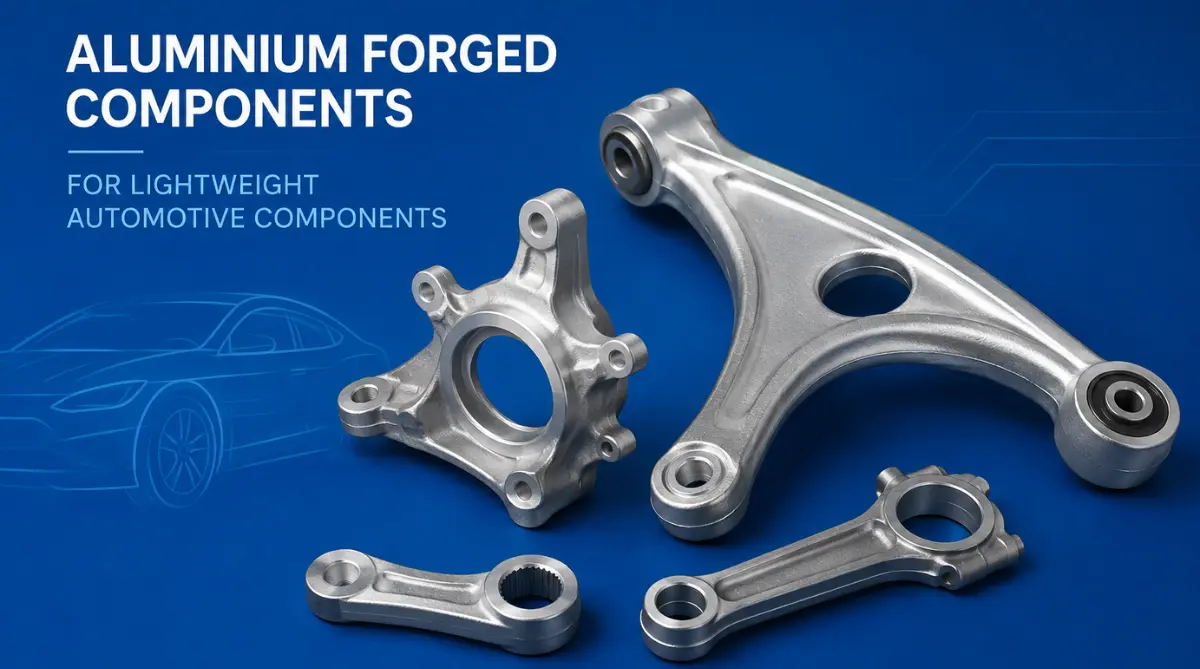
In the automotive industry, 6061 is often selected for chassis components, suspension parts, and wheel hubs. While it is not as strong as 7075, sufficient strength is provided for most consumer vehicle applications at a significantly lower cost. Furthermore, the ability to weld 6061 allows for more flexible assembly methods in mass production.
Summary of Key Takeaways
6061: 6061 is the best aluminium alloy for forging when cost, corrosion resistance, and weldability are the primary concerns.
7075: 7075 is the preferred choice for extreme high-strength applications where weight reduction is the absolute priority.
Process Control: The forging of 7075 requires more sophisticated process control compared to the relatively forgiving nature of 6061.
Post Treatments: Post-forging treatments, such as anodizing, are often required for 7075 to compensate for its lower corrosion resistance.
Frequently Asked Questions (FAQ)
1. Is 7075 always better than 6061 because it is stronger?
No, 7075 is not universally "better." While it is stronger, it is also more expensive, harder to weld, and more prone to corrosion. 6061 is often the superior choice for marine environments or projects with strict budgetary constraints.
2. Can 7075 aluminium be welded after forging?
Welding of 7075 is generally avoided in structural applications. The heat from welding can cause "liquid metal embrittlement" and significantly weaken the heat-affected zone. If joining is required, mechanical fasteners or specialized friction stir welding are typically utilized.
3. Why is 6061 preferred for marine forging applications?
The corrosion resistance of 6061 aluminium is vastly superior to 7075. In saltwater environments, 7075 can degrade rapidly without expensive specialized coatings, whereas 6061 remains stable.
4. How does the cost of 6061 vs 7075 compare?
Generally, 7075 is more expensive than 6061. This is due to the higher cost of the alloying elements (Zinc/Copper) and the more complex processing requirements during forging and heat treatment.
5. Which alloy offers better machinability after the forging process?
While both are considered "good," 7075 is often praised for its ability to produce very fine chips and a high-quality surface finish during CNC machining, whereas 6061 can occasionally be "gummy" if the tooling is not optimized.
Optimize Your Manufacturing with IQS Engineering
Precision and material expertise are required to navigate the complexities of aluminium alloy selection. At IQS Engineering, advanced forging process techniques are employed to ensure that every component meets the highest industrial standards. Whether aluminium forging is needed for high-strength aerospace parts or versatile automotive components, the most efficient solutions are provided by our team.