
Sales Inquiry
The Ultimate Guide to Copper Forging: Benefits, Applications & Why IQS Engineering Solutions Leads the Market
Published on 2026-02-01
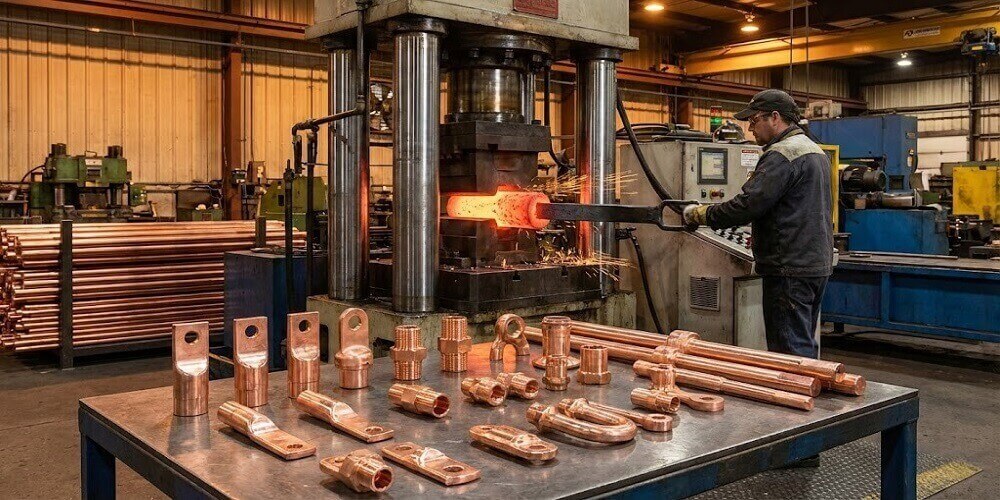
Copper forging is one of the foundational processes in metal manufacturing, blending strength, precision, and performance to create components used across multiple industries worldwide. From electrical fittings to industrial hardware, copper forging delivers durability and conductivity that few metals can match. In this guide, we explore what copper forging is, its advantages, applications, and why IQS Engineering Solutions Pvt. Ltd. stands out as a premier copper forging company.
What Is Copper Forging?
Copper forging is a metalworking process where raw copper or copper alloys are heated and shaped using compressive forces to achieve specific forms and physical properties. Unlike casting, forging refines the metal’s grain structure, enhancing strength and reliability. Forged copper parts have tighter tolerances, better surface finish, and improved material integrity, making them ideal for high-performance industrial applications.
At IQS Engineering Solutions, every copper forging component is manufactured under strict quality standards using advanced machinery including drilling, tapping, turning, milling, heat treatment, shot blasting, and plating.
Key Advantages of Copper Forging
- Exceptional Strength and Durability: Improved grain alignment and removal of internal defects provide superior mechanical reliability.
- Corrosion Resistance: Copper naturally resists corrosion, making forged components ideal for harsh environments.
- Leak-Proof Integrity: Dense, non-porous structure allows thinner sections without compromising strength.
- Superior Conductivity: Ideal for electrical, earthing, and heat transfer applications.
- Cost-Effective Production: Efficient for high-volume manufacturing with minimal finishing.
Common Applications of Copper Forged Components
- Electrical & Earthing Systems: Connectors, terminals, grounding rods and fittings.
- Agricultural Equipment: Durable corrosion-resistant components.
- Building Hardware: Brackets, fixtures, and fasteners.
- Electronics & Consumer Goods: Heat sinks, connectors, housings.
Why Choose IQS Engineering Solutions for Copper Forging
- Global Expertise: Established in 2000 with international exports.
- Integrated Manufacturing: Design, tooling, forging, machining and testing.
- Quality Assurance: ISO 9001:2015 certified processes.
- Custom Engineering Solutions: Serving automotive, aerospace, marine and fire safety industries.
The Copper Forging Process – Step by Step
- Material Selection
- Heating
- Forging
- Machining
- Finishing
- Quality Testing
Sustainability and Future Trends
With increasing focus on sustainability, copper recycling and efficient manufacturing processes are transforming production. Forging is inherently material-efficient with minimal waste and energy-optimized workflows, aligning with modern sustainable engineering goals.
Conclusion
Copper forging remains an essential manufacturing process for industries demanding strength, durability and conductivity. With global reach, advanced capabilities, and commitment to quality, IQS Engineering Solutions is a trusted partner delivering precision forged copper components across industries.