

Sales Inquiry

Bronze Forging Benefits and Industrial Applications Guide
Published on 2026-02-10
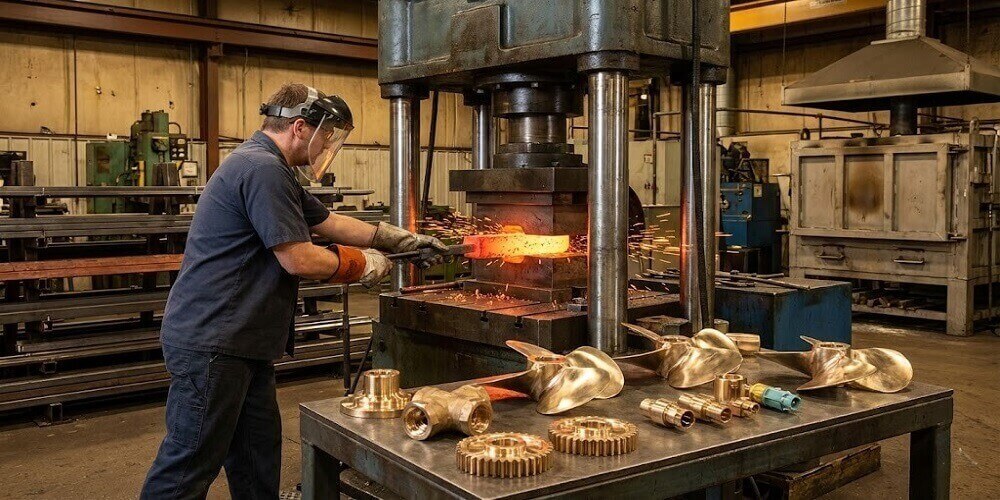
Bronze forging is one of the most versatile and valuable metalworking processes combining strength, precision, and corrosion resistance to produce components ideal for diverse industrial applications. At the heart of high-quality bronze components is IQS Engineering Solutions Pvt. Ltd., a trusted non-ferrous forging and casting manufacturer delivering precision bronze forgings across the globe. In this guide, we explain what bronze forging is, explore its advantages, key applications, and why IQS Engineering is a preferred partner for industries seeking high-performance bronze components.
What is Bronze Forging?
Bronze forging is the process of shaping bronze alloys, primarily copper combined with elements like tin, aluminum, phosphorus, zinc, or silicon through compressive force, typically under heat, to form components with structural integrity and enhanced mechanical properties. Bronze alloys’ composition varies to give specific performance characteristics such as tensile strength, wear resistance, or corrosion resistance.
Unlike casting or machining alone, forging refines the metal’s grain structure, resulting in forged parts that are denser, stronger, and more reliable for critical engineering applications.
Key Advantages of Bronze Forging
1. Superior Mechanical Strength
Forged bronze components exhibit excellent tensile strength and fatigue resistance thanks to the metal’s refined grain structure, making them suitable for high-stress applications such as valves and load-bearing hardware.
2. Corrosion Resistance
Bronze naturally resists corrosion, especially in marine, chemical, or outdoor environments. This allows bronze forgings to maintain long-term performance without rapid degradation.
3. Precision and Dimensional Accuracy
The forging process strengthens metal while allowing high dimensional accuracy and consistent tolerances, essential for precision components used in industrial equipment and mechanical systems.
4. Lustrous Surface Finishes
Forged bronze parts often feature a smooth, attractive surface that requires minimal post-processing, reducing costs and simplifying manufacturing workflows.
5. Excellent Formability
Bronze’s alloy composition enables intricate shapes while sustaining structural strength, critical when designing precision components.
6. Efficient Conductivity
While copper retains higher electrical and thermal conductivity, bronze alloys maintain reliable conductivity where durability and performance are required.
The Bronze Forging Process
Material Selection: Choosing the right bronze alloy such as aluminum bronze or phosphor bronze based on strength and corrosion needs.
Heating: The alloy is heated to a malleable but solid state to allow shaping.
Forging: High compressive forces shape the material using dies that capture the desired geometry.
Machining: Secondary machining such as drilling, milling, and tapping achieves precise tolerances.
Surface Treatment: Heat treatment, blasting, or plating enhances performance and longevity.
Quality Inspection: Rigorous testing ensures each forged part meets specifications and quality standards.
Primary Applications of Bronze Forged Components
Electrical & Earthing Systems
Forged bronze fittings and connectors are preferred in electrical infrastructure for their corrosion resistance and reliable conductivity.
Industrial Machinery
Bronze components such as bushings, bearings, and valves withstand wear and friction, reducing maintenance and increasing uptime.
Marine & Offshore Applications
Bronze is ideal for marine hardware like propeller shafts, pump components, and fasteners due to seawater corrosion resistance.
Consumer & Electronics Goods
Electronic hardware and consumer mechanical parts benefit from bronze’s precision and reliability.
Aerospace & Defence
High-strength bronze alloys support aerospace applications where durability under stress is essential.
Why Choose IQS Engineering Solutions for Bronze Forging
Integrated Expertise
IQS Engineering Solutions Pvt. Ltd. blends international quality standards with Indian manufacturing excellence.
Comprehensive Capabilities
Advanced forging presses, machining shops, CAD/CAM toolrooms and quality labs ensure precision and repeatability.
Quality & Certification
Strict quality processes ensure each component meets domestic and global performance norms.
Global Reach
IQS exports forged bronze components worldwide across automotive, marine, electronics, electrical systems and construction industries.
Future Trends in Bronze Forging
Emerging manufacturing technologies, automation, and sustainable practices are transforming bronze forging enabling reduced material waste, tighter tolerances, and more cost-effective production. As industries prioritise durability and lifecycle performance, bronze forging continues to be a strategic engineering choice.
Conclusion
From traditional metallurgy to modern manufacturing, bronze forging delivers unmatched performance and reliability. With superior strength, corrosion resistance, and precision capabilities, forged bronze remains indispensable across industries, and IQS Engineering Solutions stands at the forefront of delivering high-quality precision forged bronze components worldwide.


