
Sales Inquiry

What Are the Key Forging Parts Used in the Marine Industry?

June 10, 2026
The most important forging parts used in the marine equipment industry include propeller shafts, crankshafts, connecting rods, rudder stocks, flanges, couplings, valve components, and anchor handling equipment. These forged marine components are preferred because they offer exceptional strength, fatigue resistance, durability, and corrosion resistance qualities essential for operating safely in harsh offshore and deep-sea environments.
If you've ever spent time on a commercial ship or offshore platform, you know the ocean is unforgiving. Saltwater, relentless vibration, and extreme loads push every piece of machinery to its absolute limit. That's exactly why marine engineers don't take chances with critical components. They rely on the proven strength of marine forging parts to keep operations running smoothly.
I've spent years working in industrial forging and marine engineering, and I can tell you that not all metal is created equal. When a ship is halfway across the Atlantic, you need parts that won't crack under pressure. In this guide, we're going to break down the key forged components used in the marine equipment industry. We'll also explore why forging is the undisputed king of manufacturing for the high seas.
Why the Sea Demands Forged Components
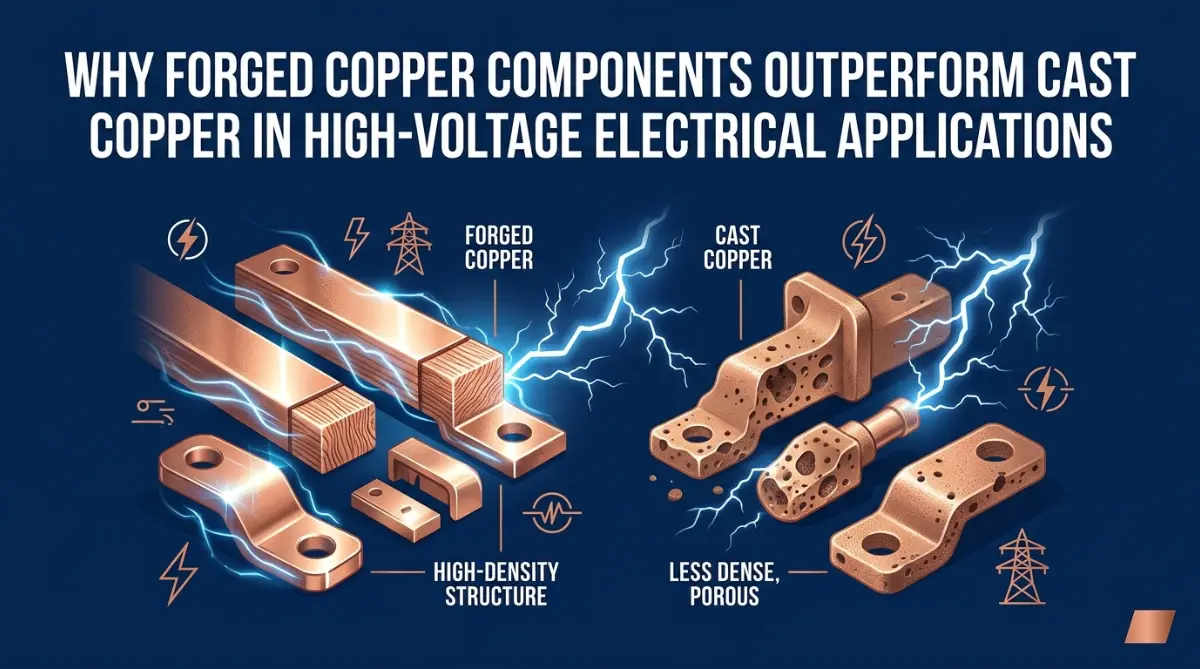
Marine environments are brutal. Saltwater acts as a constant corrosive agent, while wave impact and engine vibrations create massive dynamic stress. If you use standard cast parts in these conditions, you're asking for trouble. Cast parts often have microscopic internal voids that become stress points, eventually leading to catastrophic failure.
Forging, on the other hand, physically compresses and aligns the metal's grain structure to match the shape of the part. This gives forged components for marine equipment incredible fatigue resistance and sheer strength. Whether it's a naval vessel, a massive offshore oil rig, or a heavy-duty commercial ship, these parts are built to endure.
When low-quality parts fail at sea, the consequences are disastrous. A snapped propeller shaft or a cracked steering component can leave a vessel stranded, causing millions in delays and risking lives. That's why top-tier shipbuilders strictly specify forged marine components. Looking ahead through 2026, the marine industry is pushing for higher efficiency and sustainability. We're seeing a massive shift toward advanced, high-strength alloys and precision forging. With digital quality control systems becoming standard, modern marine industry forgings are lighter, stronger, and more reliable than ever before.
Detailed Coverage of Key Marine Forging Parts
Let's look at the heavy lifters. Here are the most critical forged parts keeping the maritime world afloat.
1. Shafts
Marine shafts transmit immense power from the engine to the propeller. They handle constant bending loads and extreme torque. Forging is heavily preferred over casting because it guarantees a continuous grain flow, providing the durability needed to prevent snapping under rotational stress.
2. Flanges
Flanges connect piping systems, pumps, and valves throughout the ship. They must maintain a perfect, leak-proof seal despite extreme pressure and vibration. Forging ensures these connections won't warp or crack, which is vital for safe fuel and water transfer.
3. Couplings
Couplings connect rotating shafts and help absorb misalignment and shock loads. A forged coupling delivers the high torque-carrying capacity required in heavy marine applications. It prevents the rapid wear and tear you'd typically see with fabricated alternatives.
4. Propeller Components
Propellers face constant resistance from the water and high levels of cavitation. Forged propeller hubs and blades offer superior structural integrity. They handle the massive thrust generated by marine engines without suffering from early metal fatigue.
5. Connecting Rods
Inside the ship's massive engines, connecting rods transfer power from the pistons to the crankshaft. The continuous push-and-pull motion requires exceptional fatigue strength. Forging is the only process that produces connecting rods capable of surviving millions of high-impact cycles.
6. Crankshafts
The crankshaft is the beating heart of a marine engine. It converts linear piston movement into the rotational force that drives the ship. Because of the massive loads involved, marine crankshafts are almost exclusively forged, ensuring unmatched rigidity and longevity.
7. Valve Bodies
Valves control the flow of everything from engine coolant to high-pressure steam. Forged valve bodies prevent the microscopic porosity that often plagues cast valves. This guarantees they won't leak or rupture when handling highly pressurized or corrosive fluids.
8. Pump Components
Marine pumps manage ballast, bilge water, and firefighting systems. The internal impellers and casings are subjected to abrasive saltwater and high pressures. Forging these parts out of corrosion-resistant alloys ensures the pumps work perfectly during an emergency.
9. Hooks and Lifting Equipment
Cranes and davits on deck rely on lifting hooks to move cargo and deploy lifeboats. A forged hook provides immense tensile strength and won't suddenly snap under a heavy load. It will slowly bend before it breaks, giving crews a crucial visual warning.
10. Marine Fasteners
You can't hold a ship together with hardware-store bolts. High-strength marine hardware forging produces massive studs, hex bolts, and shackles that secure heavy machinery. These fasteners resist the constant shearing forces and vibrations that tear weaker bolts apart.
11. Steering System Components
Rudder stocks and steering gear control the vessel's direction against powerful ocean currents. These parts face extreme transversal forces and bending moments. Forging provides the immense structural density needed to keep the ship responding safely to the helm.
12. Engine and Transmission Parts
Beyond the crankshaft, marine gearboxes rely on forged gears and drive discs. These marine forging applications require tight tolerances and hard-wearing teeth. Forging creates gears that transmit power smoothly while resisting premature wear and tooth breakage.
Manufacturing & Material Insights
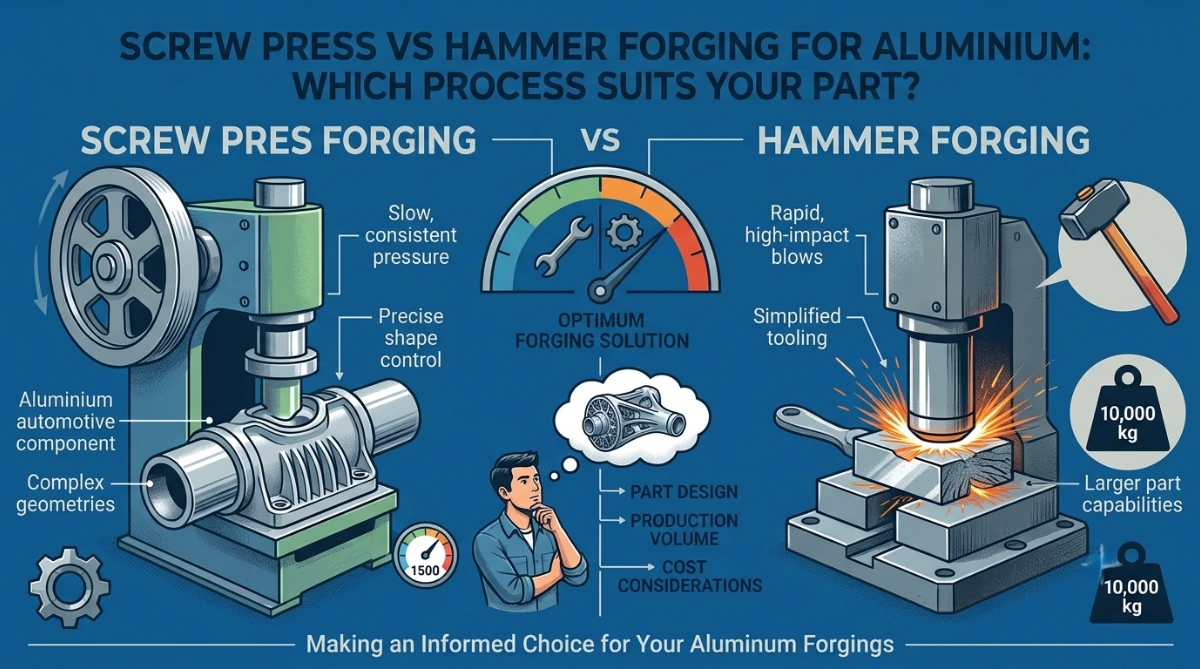
So, how do we make these bulletproof parts? Most large marine components use open-die forging. This process involves heating massive metal ingots and pounding them into shape between flat dies. It's perfect for large, heavy parts like propeller shafts. Closed-die forging is used for smaller, intricate parts like valves and connecting rods, offering incredible precision. The material you choose dictates the part's lifespan. Stainless steel marine forgings are incredibly popular because they naturally resist saltwater corrosion and pitting. We often use 316L or duplex stainless steel for parts exposed directly to the ocean. Other crucial materials include bronze, brass, and copper alloys. These are excellent for seawater systems because they resist marine biofouling. Carbon steel and aluminum alloys are used where high strength-to-weight ratios are needed. Ultimately, picking the right alloy prevents rapid degradation and keeps maintenance costs low.
Standards, Testing, and True Authority
When sourcing parts, you can't just take a supplier's word for it. You need to look for a marine equipment forging manufacturer that strictly follows international marine standards, like ABS or DNV certifications. Quality starts with raw material tracing and ends with rigorous testing. Always verify that a supplier uses Non-Destructive Testing (NDT), such as ultrasonic or magnetic particle inspections. This ensures there are no hidden internal flaws. Detailed mill certifications proving the chemical composition and heat treatment of the metal are non-negotiable in this industry.
Partnering With an Experienced Manufacturer
If you want to keep your projects on schedule and your vessels safe, you need the right manufacturing partner. Sourcing parts from middlemen often leads to delays, mismatched quality, and a lack of accountability. That's why smart procurement managers partner with a facility that handles everything under one roof.
You want a manufacturer with complete in-house capabilities from tooling development and custom forging to precision CNC machining and advanced heat treatment. As a team already deeply established in the international market, IQS Engineering Solutions understands that controlling the entire process guarantees flawless quality. If you're looking for durable, precision-engineered parts for your next project, explore our Marine Hardware solutions to see how we can support your fleet.
Frequently Asked Questions (People Also Ask)
1. Why is forging better than casting for marine equipment?
Forging compresses the metal and aligns its internal grain structure, removing air pockets and weaknesses. This makes forged parts vastly stronger and more resistant to impact and fatigue compared to cast parts, which can be brittle.
2. What materials are used for forged marine components?
Common materials include carbon steel, alloy steels, and various grades of stainless steel (like 316 and duplex). Manufacturers also use bronze, brass, and copper alloys for their excellent resistance to saltwater corrosion.
3. How do you prevent corrosion on marine forging parts?
Corrosion is prevented by selecting the right materials, such as stainless steel or nickel alloys, and applying protective surface treatments. Regular maintenance and proper heat treatment during manufacturing also play a huge role in longevity.
4. What is the most important forged part of a ship's engine?
The crankshaft is arguably the most critical forged part in a marine engine. It handles immense, continuous stress to convert the engine's power into rotational force for the propeller.
5. Are stainless steel marine forgings expensive?
While stainless steel forgings have a higher upfront cost than standard steel, they are highly cost-effective in the long run. Their resistance to rust and pitting drastically reduces replacement and maintenance expenses.
6. How do shipbuilders test the quality of forged parts?
Shipbuilders and manufacturers use Non-Destructive Testing (NDT) methods like ultrasonic testing, X-ray inspection, and magnetic particle testing. This ensures the part is structurally sound without having to cut it open.