
Sales Inquiry

Current Trends and Technological Advancements in Aluminum Forging and Casting

July 14, 2026
Have you noticed how much lighter vehicles, industrial machinery, and aerospace components have become over the last decade? It isn’t an accident.
Heavy steel and iron parts are rapidly being phased out. In their place, manufacturers are turning to a material that offers an unmatched strength-to-weight ratio: aluminum.
But it’s not just the material itself that is changing the game, it’s how we shape it. The processes behind forming these components have evolved dramatically. If you are still relying on legacy methods to source your non-ferrous parts, you might be leaving money, efficiency, and structural integrity on the table.
Let’s look at the current trends and technological advancements in aluminum forging and casting, why these shifts matter, and how to position your supply chain for the future.
Why Aluminum is Replacing Conventional Metals
Before looking at the manufacturing technology itself, it helps to understand why the demand for Aluminium Forging Components and castings is skyrocketing.
Industries are facing a massive push toward lightweighting. In the automotive sector, removing just 10% of a vehicle's weight can improve fuel efficiency by up to 8%. For electric vehicles (EVs), lighter components directly translate to longer battery range.
We see this same pressure in aerospace, HVAC, and marine applications. Engineers are constantly challenged to reduce weight without sacrificing tensile strength or dimensional accuracy.
Aluminum delivers on all fronts. It’s naturally corrosion-resistant, highly conductive, and roughly one-third the weight of steel. But to handle the extreme stress required in modern industrial applications, the way we forge and cast aluminum had to get much smarter.
Breakthroughs in the Aluminum Forging Process
Forging is all about manipulating metal under extreme pressure to align its grain structure. This creates a part that is structurally stronger than almost any other manufacturing method
Historically, the aluminum forging process relied heavily on manual oversight and trial-and-error tooling. Today, technology has flipped that script entirely.
Precision Closed Die Forging
One of the biggest shifts is the advancement in closed die forging (also known as impression die forging).
In the past, forged parts often required extensive secondary machining to reach their final tolerances. That meant wasted material and longer lead times. Modern precision aluminum forging changes this by utilizing highly advanced CAD/CAM software during the Tooling & Die Making phase.
Engineers now run complex digital simulations to predict exactly how the aluminum will flow into the die under pressure. This minimizes defects, reduces material waste, and yields near-net-shape components straight from the press.
The Rise of Advanced Aluminum Alloys
We aren’t just forging the same metals we used twenty years ago. The development of advanced aluminum alloys is a massive trend.
Manufacturers are increasingly utilizing 6000 and 7000 series aluminum alloys. For example, 7075 aluminum offers a tensile strength comparable to many steels, making it perfect for high-stress aerospace and automotive components.
When you combine these advanced alloys with precision forging techniques, you get parts that survive environments that would have destroyed older components. (If you are interested in how this applies specifically to the automotive shift, keep an eye out for our upcoming guide on Aluminum Forging Applications in the EV Industry).
Innovations Shaping the Aluminum Casting Process
While forging aligns the grain structure for maximum strength, casting offers unmatched flexibility. If you need complex internal cavities or highly intricate geometries, casting is the answer.
And just like forging, the aluminum casting process has seen major technological upgrades.
High-Pressure Die Casting (HPDC) Evolution
Aluminum die casting technology has become the backbone of high-volume manufacturing.
Recent advancements in High-Pressure Die Casting (HPDC) allow molten aluminum to be injected into steel molds at incredible speeds and pressures. The result? Exceptionally thin-walled components that maintain strict dimensional stability.
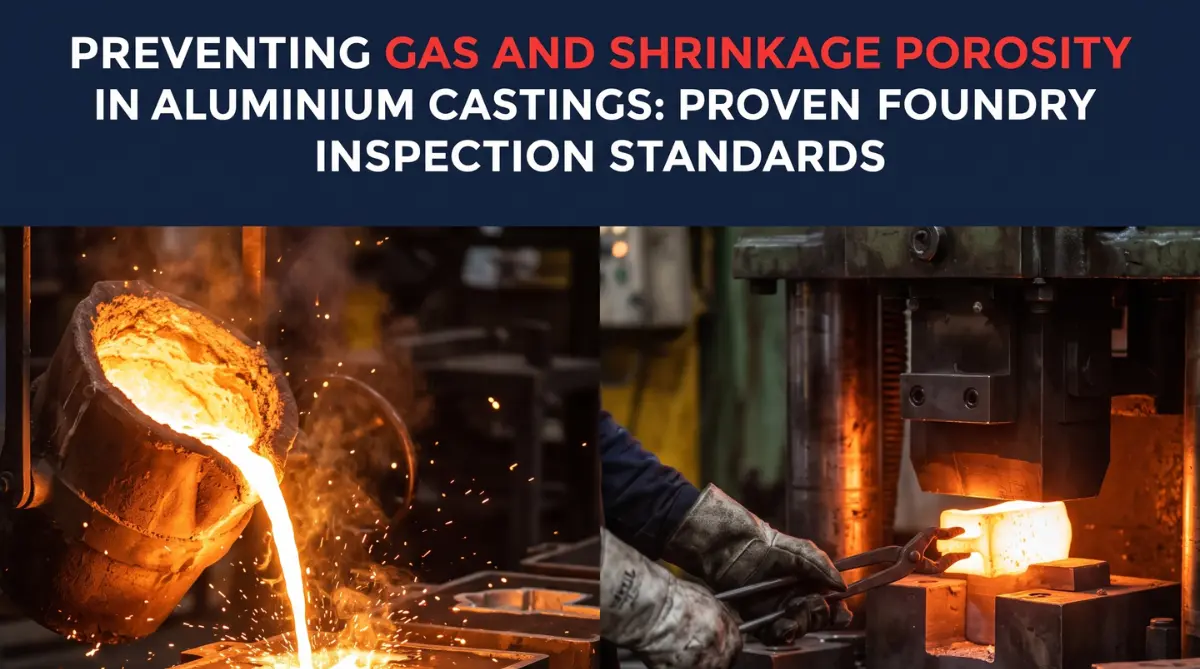
Modern HPDC machines are equipped with real-time monitoring systems that adjust injection pressure, cooling rates, and die temperatures on the fly. This virtually eliminates porosity (tiny air pockets trapped in the metal), which has historically been the biggest challenge in Aluminium Castings.
Smart Manufacturing and Industry 4.0
You can’t talk about manufacturing trends without talking about data. Industry 4.0 in manufacturing is no longer a buzzword; it’s a standard requirement on the factory floor.
Foundries and forging facilities are integrating IoT (Internet of Things) sensors directly into their equipment. This smart manufacturing approach means machines can predict when a die is going to wear out before it actually fails.
By applying AI in manufacturing, engineers can analyze thousands of data points from the casting process to optimize cycle times. The end result for the buyer is tighter tolerances, fewer rejected parts, and more reliable delivery schedules.
Forging vs. Casting: Which is Right for Your Component?
One of the most common questions engineers ask is whether they should forge or cast a specific part.
While both have benefited from digital manufacturing advancements, they serve different functional needs.
| Feature | Aluminum Forging | Aluminum Casting |
|---|---|---|
| Strength & Durability | Exceptional (aligned grain structure) | Moderate to High |
| Design Complexity | Limited internal cavities | Excellent for complex geometries |
| Production Volume | Best for medium to high volume | Ideal for very high volume |
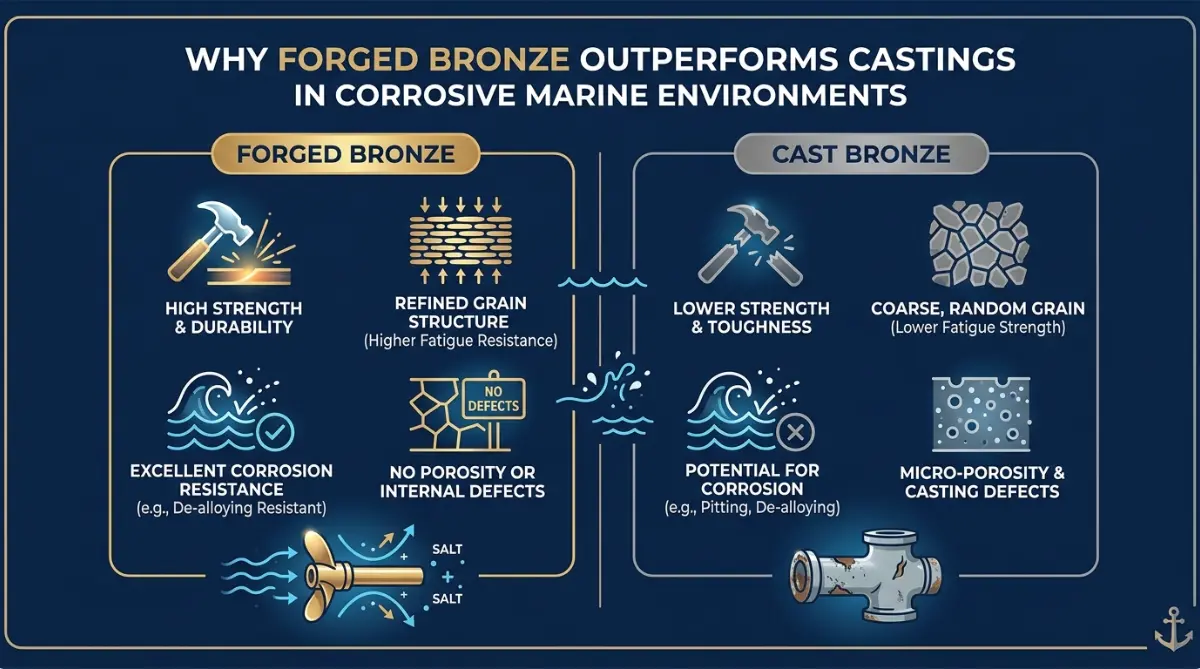
| Porosity Risk | Zero | Low (with modern HPDC tech) |
| Tooling Cost | Generally higher upfront | Varies based on casting method |
Choosing the right method comes down to the specific mechanical requirements of your component.
Sustainability and the Future of Aluminum Manufacturing
Sustainability is no longer a secondary consideration. It is now a key factor in supplier selection.
Aluminum offers a significant advantage because it is fully recyclable. In fact, recycled aluminum requires up to 95% less energy compared to primary production. This makes it one of the most sustainable materials available for industrial use.
Manufacturers are also adopting energy-efficient furnaces, optimizing material usage, and implementing recycling systems within their production cycles. These efforts not only reduce environmental impact but also improve cost efficiency over time.
As industries move toward greener practices, sustainable aluminum manufacturing will continue to gain importance.
What Buyers Should Evaluate in a Manufacturing Partner
Choosing the right manufacturing partner is just as important as choosing the right process. While pricing is always a consideration, it should not be the only factor.
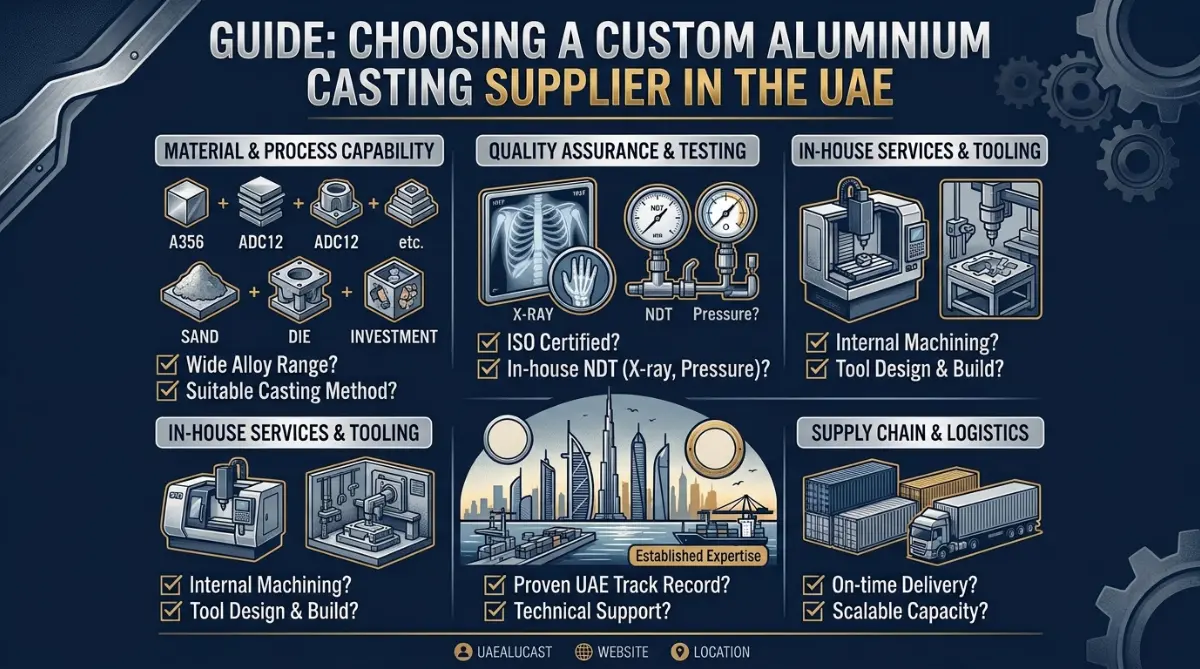
Buyers should look for manufacturers with integrated capabilities. A company that handles forging, casting, machining, and tooling under one roof can maintain better control over quality and timelines. This integration reduces dependency on multiple vendors and minimizes coordination challenges.
Engineering expertise is another critical factor. Manufacturers who can provide design input, material selection guidance, and process optimization support add significant value, especially in complex projects.
Quality systems and certifications such as ISO 9001:2015 and IATF standards indicate a structured approach to production and traceability. Additionally, strong Non-Ferrous Forging Solutions backed by robust engineering capabilities ensure consistent performance across applications.
Frequently Asked Questions
1. What is the difference between aluminum forging and aluminum casting?
Aluminum forging shapes solid metal under extreme pressure to align its grain structure for maximum strength. Aluminum casting involves pouring molten aluminum into a mold, which is ideal for creating complex shapes and internal cavities.
2.How is Industry 4.0 used in aluminum manufacturing?
Industry 4.0 integrates IoT sensors and AI directly into forging presses and die casting machines. This allows manufacturers to monitor temperatures, pressures, and cycle times in real-time to predict maintenance needs and prevent defects.
3.Why is aluminum replacing steel in industrial applications?
Aluminum offers an exceptional strength-to-weight ratio. It is about one-third the weight of steel, naturally corrosion-resistant, and highly conductive, making it essential for lightweighting in automotive, aerospace, and industrial machinery.