
Sales Inquiry

Role of Copper Forging Parts in Renewable Energy and Solar Applications

May 22, 2026
Copper forging parts in renewable energy systems function as the vital conductive backbone, enabling efficient power generation, storage, and transmission. These high-conductivity copper forgings ensure minimal energy loss and superior durability even in extreme environmental conditions. As global and Indian energy sectors transition towards sustainable power, forged copper components remain essential for the long-term reliability of solar panel arrays and wind turbine infrastructure.
The shift towards green energy demands components that can handle high electrical loads without failure. Engineering standards require materials that offer maximum electrical conductivity alongside exceptional mechanical strength. Forging copper under high pressure aligns the grain structure of the metal, creating parts that significantly outperform standard cast materials in both conductivity and structural integrity.
The Engineering Need for Copper in Green Energy
Renewable energy installations, particularly solar and wind farms, operate in harsh outdoor environments. They face constant temperature fluctuations, moisture, and high voltage loads. To maintain efficiency, solar and wind power generators require materials that minimise electrical resistance.
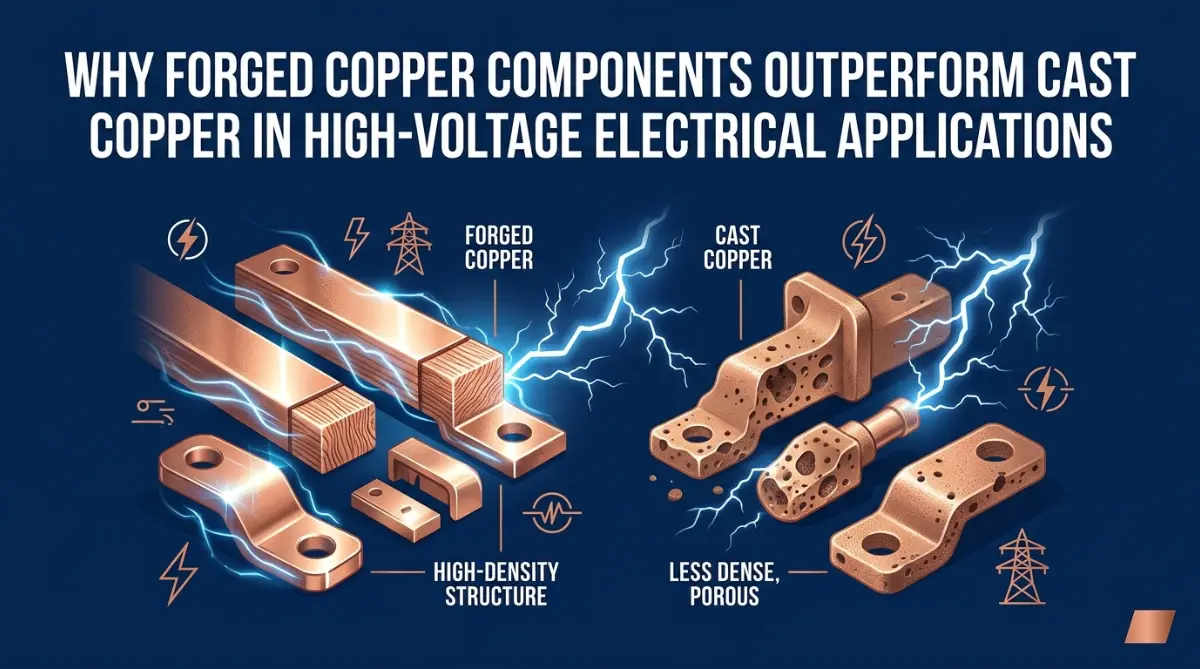
Scientific studies and metallurgical testing demonstrate that forged copper provides superior thermal and electrical conductivity compared to other manufacturing methods. The forging process eliminates internal voids and porosity, which are common defects in casting. This dense, uniform structure ensures uninterrupted electron flow, which is crucial for reducing power loss during the conversion of direct current (DC) to alternating current (AC) in solar applications.
Use of Copper Forging Parts in Solar Applications
Solar energy systems depend heavily on precise, high-quality copper components. Manufacturers use forged copper parts for electrical conductivity across various stages of the solar power generation cycle.
Solar Inverters and Transformers
Inverters act as the brain of a solar power system. They convert DC generated by the solar panels into usable AC. This process generates significant heat. High-conductivity copper forgings serve as heat sinks and internal connectors within these inverters, quickly dissipating heat and maintaining optimal operating temperatures.
Busbars and Distribution Boards
Solar arrays require robust busbars to collect and distribute the electricity generated by multiple panels. Forged copper busbars handle immense electrical loads safely. Their solid structural integrity prevents bending or degrading over time, ensuring a stable connection to the electrical grid.
Grounding and Earthing Equipment
Lightning strikes and electrical surges pose a severe threat to solar farms. Copper applications in wind and solar energy include heavy-duty grounding components. Forged copper earth rods and connectors provide a permanent, low-resistance path to the ground, protecting expensive photovoltaic (PV) modules and sensitive switchgear from damage.
Forged Copper vs. Cast Copper: A Comparison
Engineers often must choose between forged and cast components when designing renewable energy systems. The table below outlines why forging is the preferred method for critical electrical applications.
| Feature | Forged Copper Components | Cast Copper Components |
|---|---|---|
| Internal Structure | Dense, continuous grain flow; zero porosity | Prone to internal microscopic voids and air pockets |
| Electrical Conductivity | Maximum efficiency; minimal resistance | Lower efficiency due to structural inconsistencies |
| Mechanical Strength | Extremely high tensile strength and durability | Brittle under high stress or sudden impact |
| Thermal Management | Excellent heat dissipation capabilities | Moderate heat dissipation |
| Ideal Application | High-voltage connectors, busbars, turbine slip rings | Low-stress, non-critical decorative or static parts |
Copper Applications in Wind and Solar Energy
While solar power relies on copper for static transmission, wind energy utilises industrial copper forging uses for dynamic, moving parts. Wind turbines require large generators housed within the nacelle. These generators use forged copper slip rings and commutators.
Because wind turbines sit high above the ground or offshore, maintenance is difficult and expensive. The superior wear resistance of forged copper parts in green energy solutions ensures these generators operate for decades without requiring frequent part replacements. The high-density surface of a forging resists the mechanical wear of continuous rotation far better than cast alternatives
Benefits of Copper Forging in Solar Energy
Integrating forged copper into renewable infrastructure delivers measurable advantages for facility operators and energy providers.
- Maximised Energy Yield: The superior electrical conductivity of forged parts reduces transmission losses, meaning more generated power reaches the grid.
- Extended Component Lifespan: The high tensile strength of forged copper resists mechanical fatigue, vibration, and thermal expansion, leading to a longer operational life.
- Reduced Maintenance Costs: Dense, non-porous forgings resist corrosion and mechanical wear, lowering the frequency of costly site repairs.
- Superior Thermal Efficiency: Forged copper manages high heat loads effectively, preventing system overheating in densely packed inverter cabinets.
- Compact Design Capabilities: Because forged copper is stronger and more conductive, engineers can design smaller, lighter components that handle the same electrical loads as larger, cast alternatives.
Frequently Asked Questions (FAQ)
1. Why do solar panels need copper components?
Solar panels and their supporting infrastructure require copper components because copper provides the best electrical conductivity of any non-precious metal. This ensures that the electricity generated by the photovoltaic cells travels to the grid with minimal energy loss.
2. What are the benefits of copper forging in solar energy?
Forging compresses the copper, eliminating air pockets and aligning the metal's grain structure. This results in parts that are mechanically stronger, highly resistant to corrosion, and superior in electrical conductivity compared to cast alternatives.
3. How do forged copper parts improve electrical conductivity?
Cast metal often contains microscopic voids (porosity) that interrupt the flow of electricity, creating resistance and heat. Forged copper is entirely dense and solid, providing an uninterrupted, highly efficient path for electrical currents.
4. What are the industrial copper forging uses in wind turbines?
Wind turbines use heavy-duty forged copper parts in their generators, specifically for components like slip rings, commutators, and heavy electrical connectors. These parts must withstand continuous mechanical wear and high voltage simultaneously.
5. Why choose forged copper over cast copper for renewable energy systems?
Renewable energy systems operate in harsh environments and must run reliably for 20 to 30 years. Forged copper offers the necessary mechanical strength and superior conductivity to handle these demands without failing, whereas cast copper is brittle and less efficient.
6. How long do copper forging parts last in solar applications?
When properly specified and installed, high-conductivity copper forgings can last the entire lifecycle of a solar power plant often exceeding 25 to 30 years due to their excellent resistance to thermal fatigue and environmental degradation.
Latest Blogs